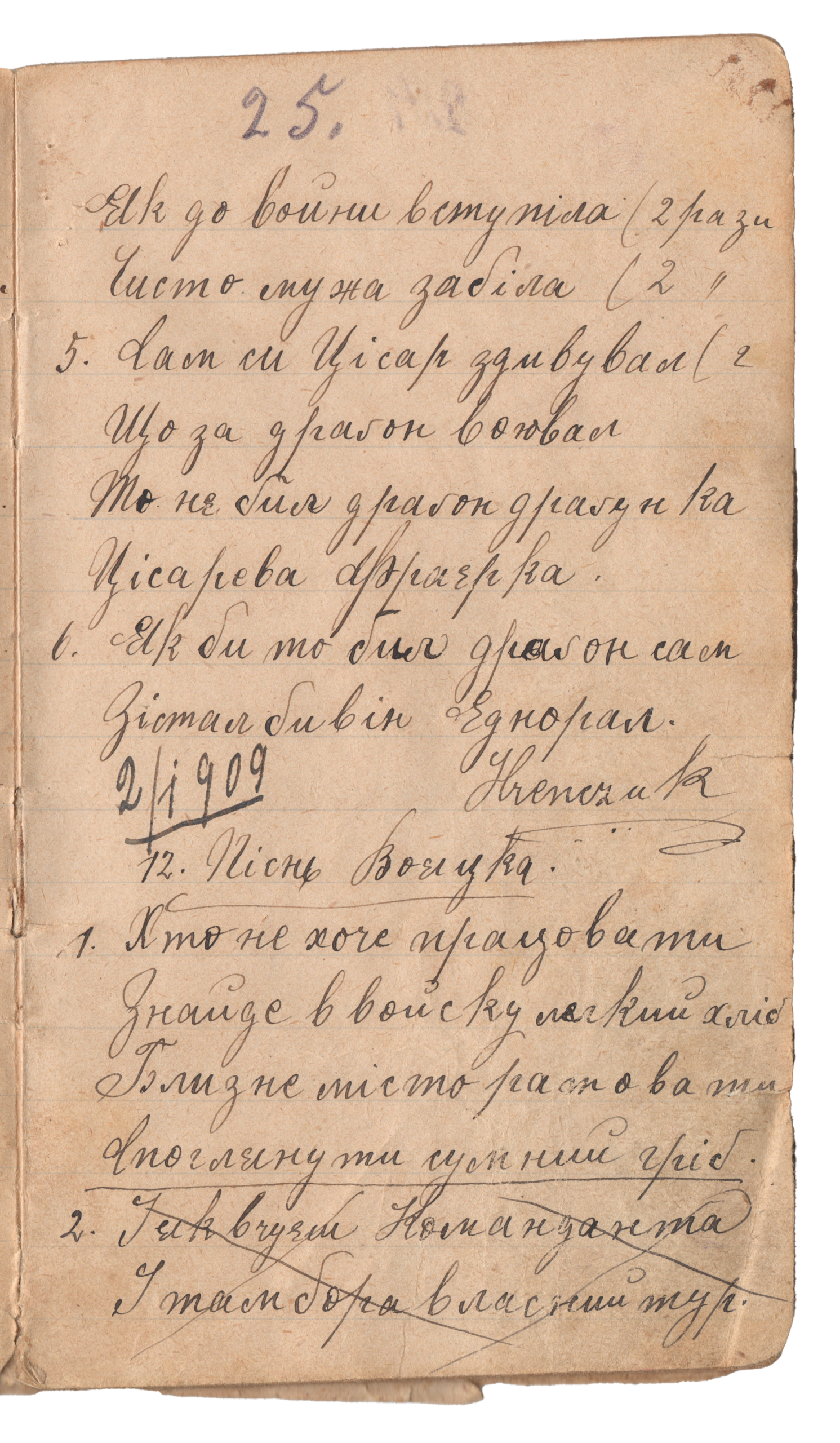
25,
Як до воїни вступіла (2рази
Чисто мужа забила (2
5. Зам си Цісар здивував (2
Що за драгон воював
То не Сім драгон драгун ка
Цісарєва дфічерка .
6. Як би то Сім драгон сам
Зістав би він Єднорал.
2/1 909
12. Піснь Воїука .
1. Хто не хоче працувати
Знайде в войску важкий хліб
Тлизне місто расова ти
Споглянути сумний гріб .
2. Тек вручи Команданта
І там бора власний тур .
25,
As she enlisted in the war (twice
She killed her husband cleanly (2
5. Then the Emperor was surprised (2
What kind of dragoon was fighting
That is not the same dragoon, dragoon girl
The Emperor’s officer .
6. If that dragoon himself
He would have become a general.
2/1 909
12. Song of the Warrior .
1. Who does not want to work
Will find heavy bread in the army
Close to the city to paint it
To glance at the sad grave .
2. Hand it over to the Commandant
And there Bora’s own tower .
Historical Context This page comes from a handwritten personal notebook of Ukrainian folk songs (called “pisni” or “пісні”) compiled around February 1, 1909 (the date “2/1 909” appears twice). The notebook was created in the Ukrainian-speaking territories of the Austro-Hungarian Empire—most likely Galicia or Bukovina—where the local population was known as Ruthenians. “Цісар” (Cisar) is the Ukrainian word for Emperor Franz Joseph I, who ruled the empire at the time. Young Ukrainian men were subject to compulsory military service in the Austro-Hungarian army, often serving in cavalry units such as dragoons (“dragoon” / “драгон”). Folk songs like these were a popular way for ordinary people to express the realities of conscription, family separation, love, and the hardships of army life.
Core Meaning & Theme The main piece on this page is Song 12: “Піснь Воїука” (“Song of the Warrior” / “Soldier’s Song”).
Its core message is a blunt, cautionary warning aimed at young men:
The earlier, unnumbered verses at the top of the page appear to belong to a different song or fragment (possibly Song 11). They tell a dramatic story of someone (a woman in disguise?) enlisting in the war, killing a husband, and astonishing the Emperor by serving as a female dragoon officer. This motif is typical of Ukrainian ballad-style songs that blend gender disguise, heroism, and the chaos of war.
Overall Theme of the Page The dominant theme is the harsh reality of military service under foreign imperial rule. These songs mix dark humor, realism, and subtle protest: they portray army life as a punishing alternative to honest civilian work, while also celebrating (or sensationalizing) acts of bravery or defiance. Such recruit and soldier songs were extremely common in Ukrainian folklore at the turn of the 20th century, serving as both entertainment and a collective outlet for the anxieties of conscription and wartime separation.