32.
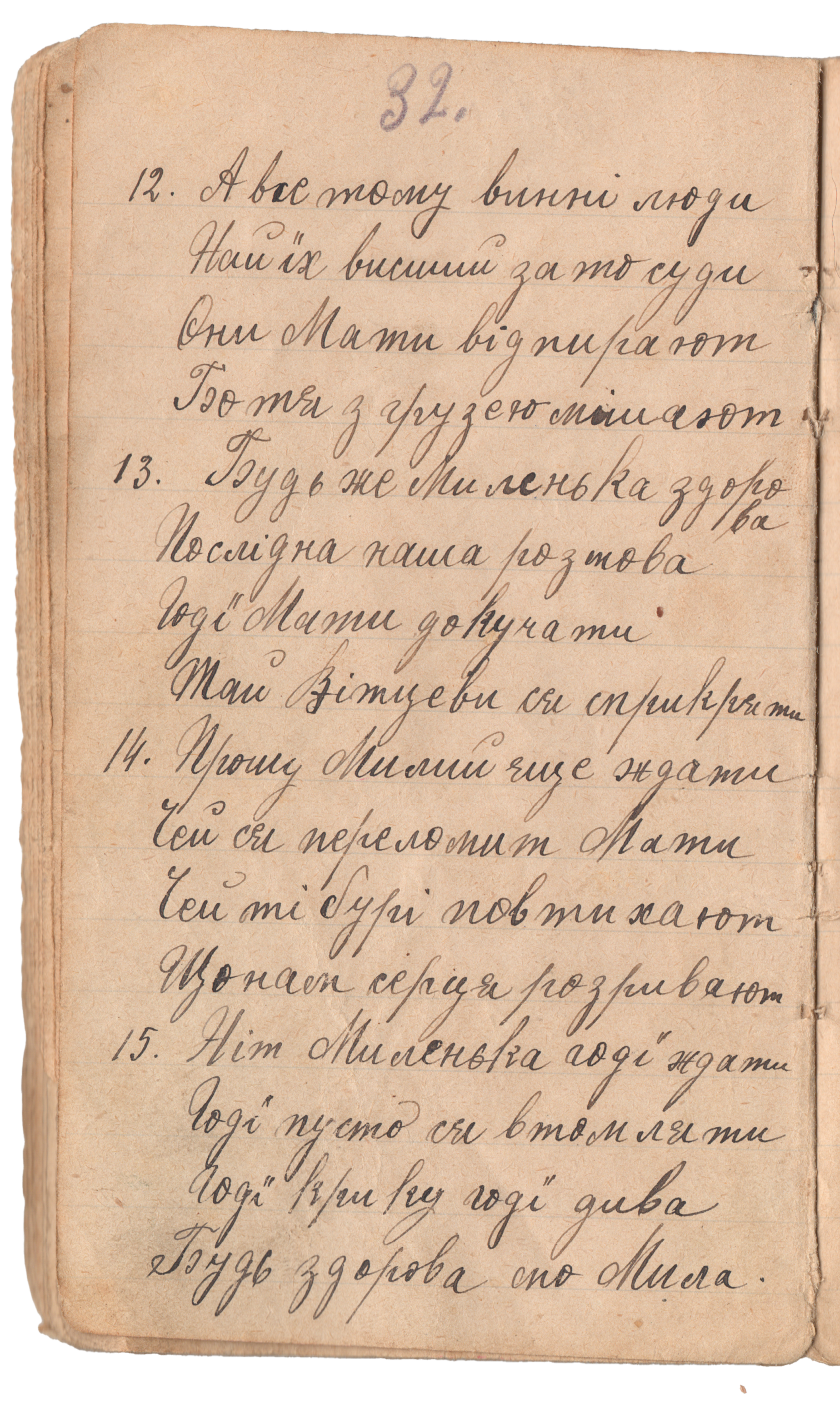
12. А все тому винні люди
Най їх висиш за то суди
Они Мати відпирают
Боги з грузею мішают
13. Будь же Миленька здорова
Послідна наша розмова
Годі Мати докучати
Май Зітцеви си сприкряти
14. Прошу Милий гице ждати
Сей си переломит Мати
Сей ті бурі повтихают
Шонам серця розривают
15. Ніт Миленька годі ждати
Годі пусто си втомляти
Годі Крику годі дива
Будь здорова спо Мила.
32.
12. And all this is the fault of the people
May the highest judge them for that
They reject the Mother
Gods mix with the burden
13. Be well then, dear one
Our last conversation
Enough for Mother to bother
May it annoy the father-in-law
14. I ask, dear one, wait a little
This will break the Mother
These storms will calm down
They tear our hearts apart
15. No, dear one, enough of waiting
Enough to tire oneself in vain
Enough of crying, enough of wonders
Be healthy, my dear one.
Core message of these stanzas (12–15 on page 32): This is the emotional climax and farewell of a romantic folk song. The speaker(s) blame “people” and especially the interfering mother (“Мати”) for ruining the relationship. There is a tense final conversation: the beloved is asked to wait through the current “storms” (troubles, family pressure, separation), but the reply is exhausted resignation—“enough waiting, enough tears, enough pointless suffering.” The song ends on a tender, bittersweet note: “Be healthy, my dear one” (Будь здорова спо Мила).
It reads like a dialogue between the young lovers (or one lover addressing both the beloved and the mother), capturing the moment when youthful love is forced to yield to family duty and external forces.
Main themes:
These motifs are clas