33.
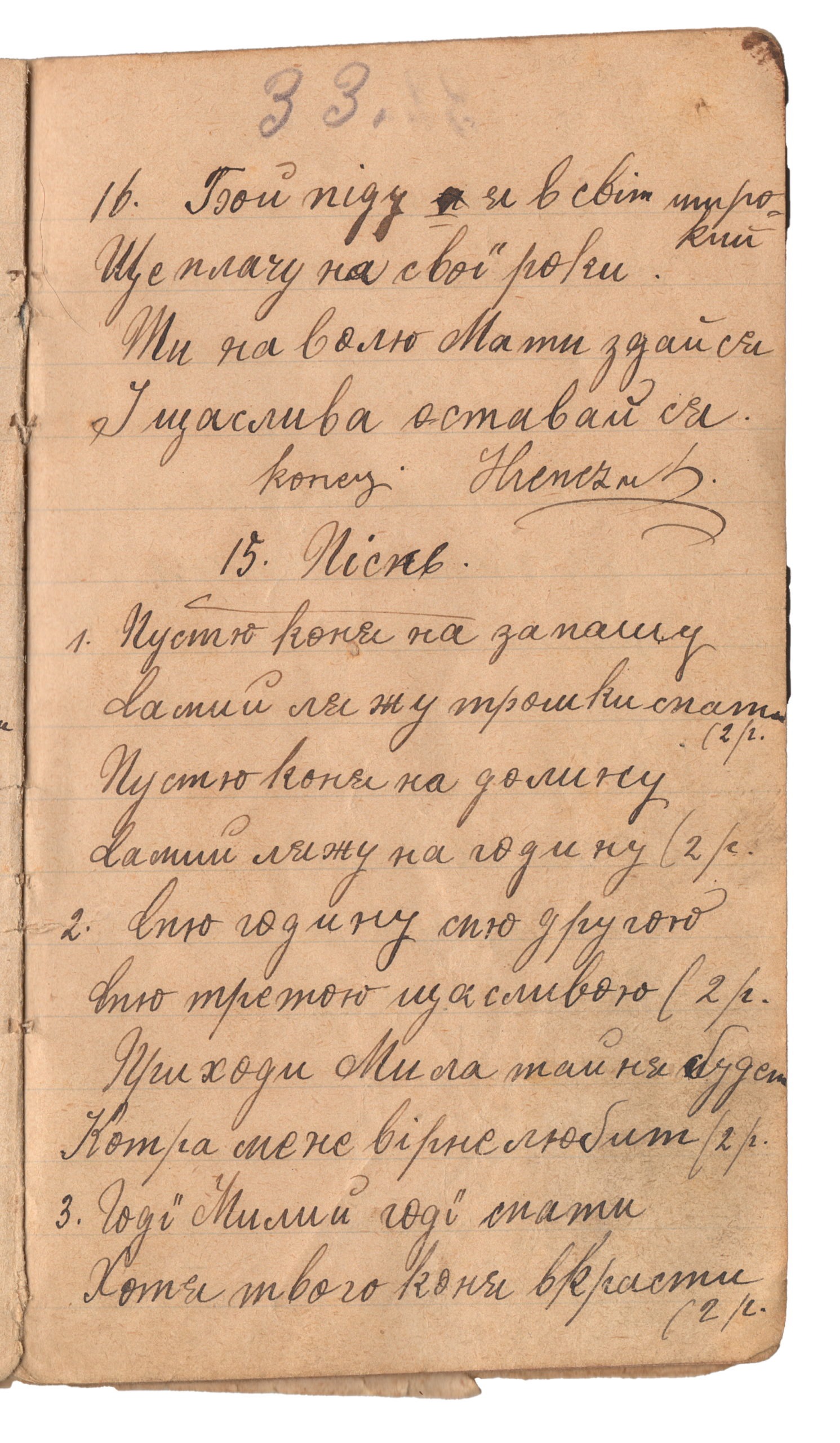
16. Гой піду я из в світ шуро
Ще плачу на свої роки .
Ми на волю Мати здайся
І щаслива оставай ся.
конец. Негепчик.
15. Піснь .
1. Пусто коня на запашку
Самий ляжу трошки спати (2р.
Пусто коня на долину
Самий ляжу на годину (2р.
2. Спо годину спо другую
Спо третюю щасливою (2р.
Приходи Мила тайна буде
Котра мене вірне любить (2р.
3. Іоді Милий годі спати
Кот ти твого коня вкрасти (2р.
33.
16. Then I will go out into the wide world
Still crying over my years .
We surrender to Mother’s will
And remain happy .
end. Nerepin.
15. Song .
1. Leave the horse in the pasture
I myself lie down to sleep a little (2x
Leave the horse in the valley
I myself lie down for an hour (2x
2. Sleep an hour, sleep another
Sleep the third happy one (2x
Come, Mila, it will be a secret
She who loves me faithfully (2x
3. Enough, dear one, enough sleeping
Time to steal your horse (2x
Page 33 – Core Theme & Message
The page wraps up one song (the farewell in stanza 16) and launches a full new one labeled “15. Піснь” (Song 15). Together they form a classic Ukrainian/Rusyn folk-romantic pair: separation and secret reunion.
This is a secret-lover rendezvous song built around the recurring folk image of the horse and sleep.
Central theme: Anticipation of a forbidden or hidden meeting between lovers, framed in the everyday language of rural life (horses, pastures, short rests). The “stealing the horse” line is classic folk-code for elopement or sneaking away together – a light-hearted yet urgent invitation to defy the separation that was just accepted in the previous stanza.
Emotional core of the page: The tension between duty/obedience (mother’s will, leaving into the world) and personal desire (the secret, faithful love of Mila). It’s the eternal folk-song drama of the young man torn between family expectations and romantic passion, expressed through the simple, repeating imagery of the horse and stolen moments.
This pair of texts on page 33 perfectly captures the notebook’s overall spirit: love songs that ache with parting but refuse to give up hope. The “end. Негепчик / Нерепчик” note suggests these are collected or composed pieces by a single hand (likely the notebook owner), preserving traditional Carpathian/Rusyn lyrical style from the early 20th century.