34.
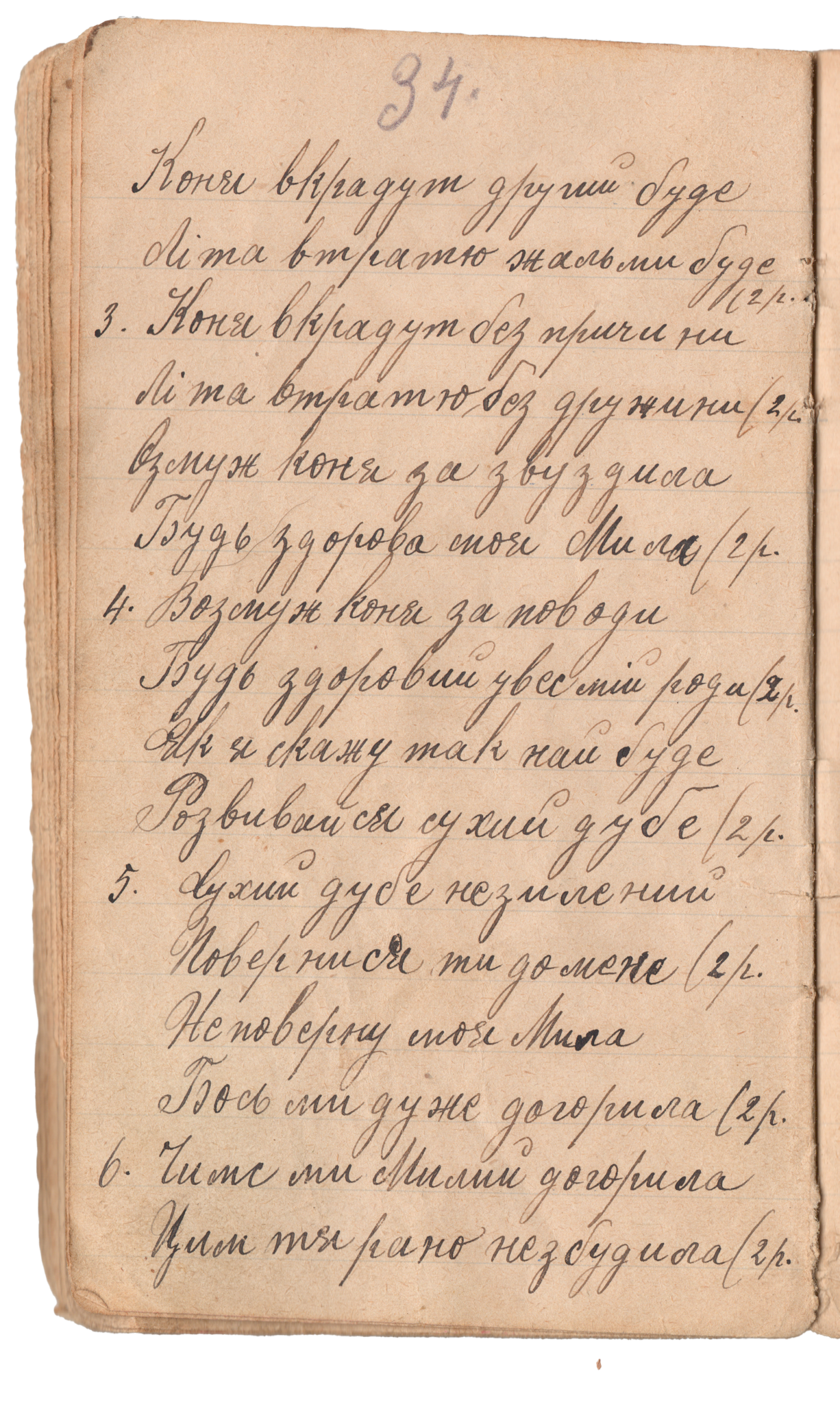
Кони вкрадут други буде
Літа втратио жальми буде
3. Кони вкрадут без причини
Літа втратио без дружини/2.
Взумж кони за звуздима
Будь здорова моя Мила/2р.
4. Возпуж кони за поводи
Будь здоровий увесний роди/2.
Як я скажу так най буде
Розвивайся сухий дубе/2р.
5. Сухий дубе незмилений
Повернися ти до мене/2р.
Не поверну моя Мила
То сь ми дуже догорила/2р.
6. Чиме ми Милий догорила
Чим ми рано незбудила/2р.
34.
They will steal the horse, there will be another
The years will be lost, it will be a pity
3. They will steal the horse without reason
The years will be lost without a wife/2.
Harness the horse for the bridle
Be healthy, my dear/2р.
4. I will take the horse by the reins
Be healthy, all my family/2.
As I say, so let it be
Unfurl yourself, dry oak/2р.
5. Dry oak unchangeable
Return to me/2р.
I will not return, my dear
That’s why I am very grieved/2р.
6. Why, my dear, did you grieve me
Why did you wake me up early/2р.
Core and theme of page 34 This is a classic Ukrainian folk parting/lament song (likely a recruit’s or Cossack farewell ballad, common in early 20th-century handwritten songbooks).
Core message: A young man is being forced to leave his beloved “Мила” (My Dear / Darling). The “stealing of the horse” is a traditional metaphor for involuntary departure — most often military conscription or war service. The speaker accepts his fate, offers tender blessings of health, and expresses deep mutual sorrow over the years of youth that will be lost and the separation that follows.
Main themes:
Overall, page 34 captures the bittersweet essence of countless Slavic folk songs from the era: love that must yield to duty, war, or destiny, while the heart still clings to the beloved. It’s a beautiful, aching expression of reluctant farewell.