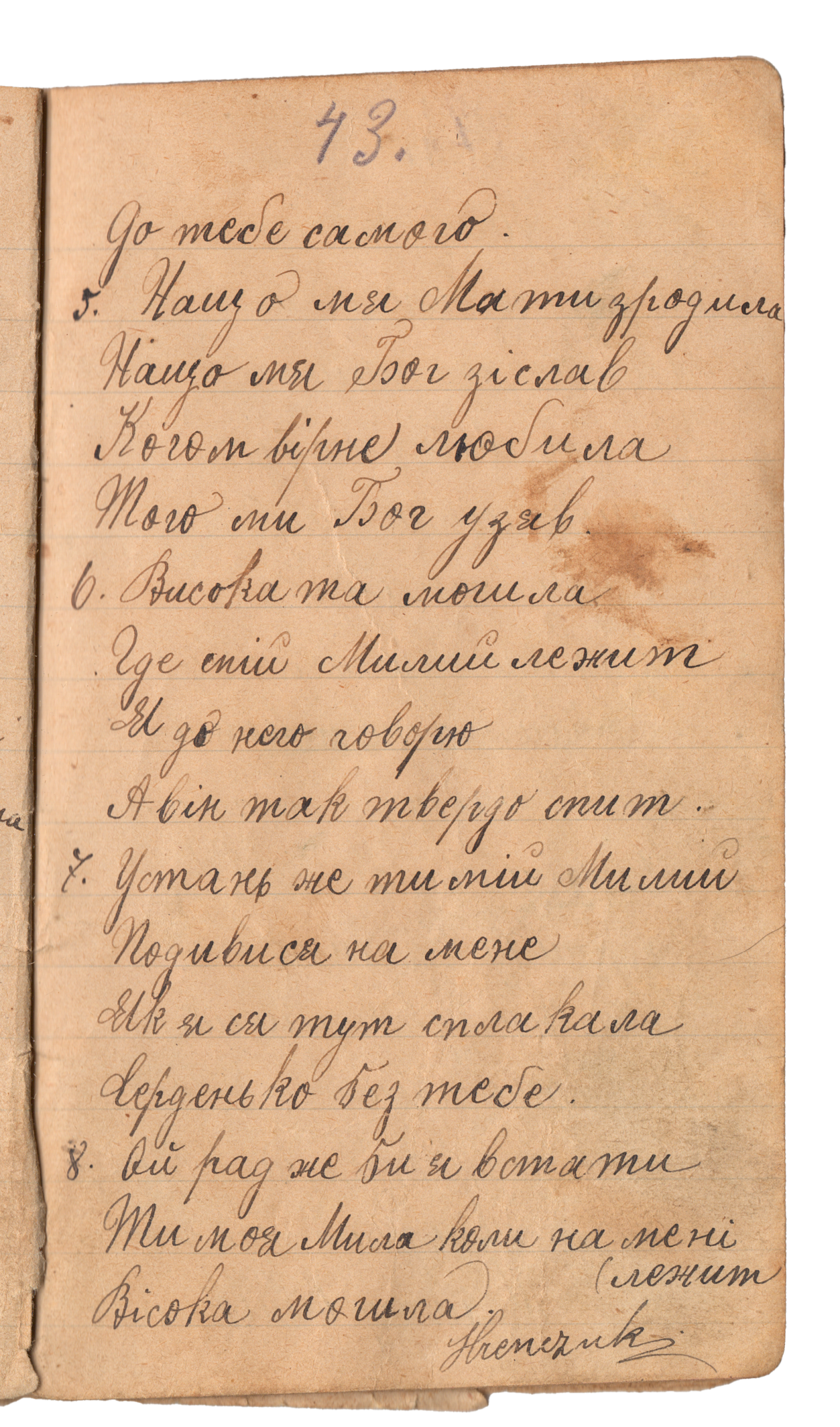
43.
До тебе самого .
5. Нащо ми Мати здогнала
Нащо ми Бог зі слав
Кого в вірне любила
Мого ти Бог узяв .
6. Висока та могила
Іде стій Милий лежить
Я до нього говорю
А він так твердо спить .
7. Устань же ти мій Милий
Подивися на мене
Як я ся тут сплакала
Серденько без тебе .
8. Ой рад же би я встати
Ми моя Мила коли на мені
Висока могила) . (лежит
Непензьк
43.
To you yourself.
5. Why did Mother reproach me
Why did God send me
Whom I faithfully loved
My [one] God took you.
6. High is that grave
There my Dear One lies
I speak to him
But he sleeps so soundly.
7. Wake up then you my Dear One
Look at me
How I cried here
My little heart without you.
8. Oh I would gladly rise
My Dear One when on me
The high grave) . (lies
Nepenz’k
Core Message: This is a raw, intimate graveside lament (verses 5–8 of song 19). The speaker stands before her beloved’s (“Милий”) high grave and pours out her heartbreak in direct address. She questions why fate—Mother’s reproach, God’s will—took him from her, describes her helpless tears, and begs him to wake up and rise, only to confront the brutal finality that the grave holds him fast in eternal sleep.
Main Themes:
The piece belongs to the classic Ukrainian folk-lament tradition (плач, голосіння), where the survivor confronts the grave and pleads with the deceased. The notebook’s repeated “Непензьк” signature suggests these are either collected folk songs or the compiler’s own imitations in authentic style. The tone is intimate, almost conversational, turning private mourning into poetic song.