63. 62. ЛВ
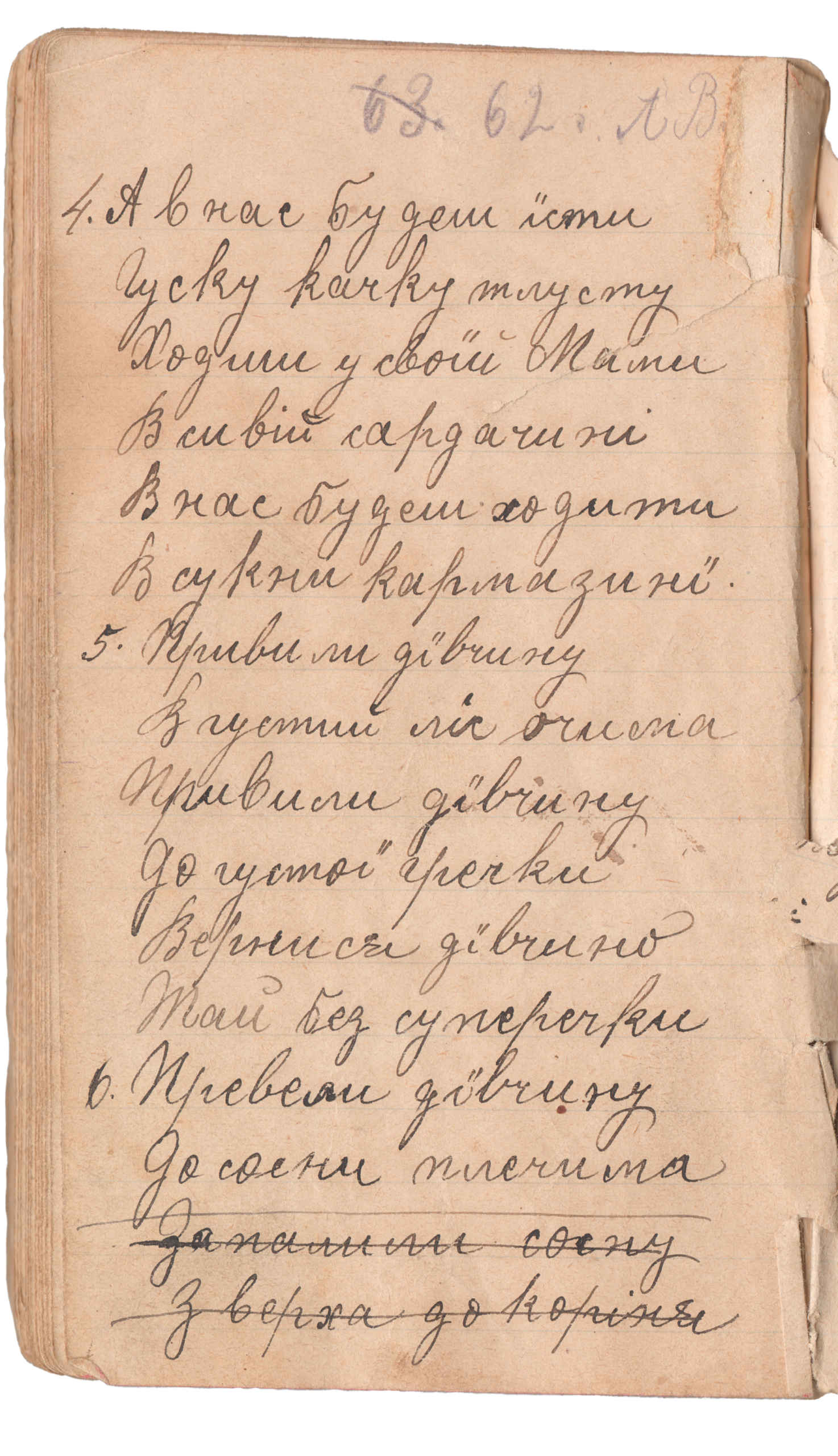
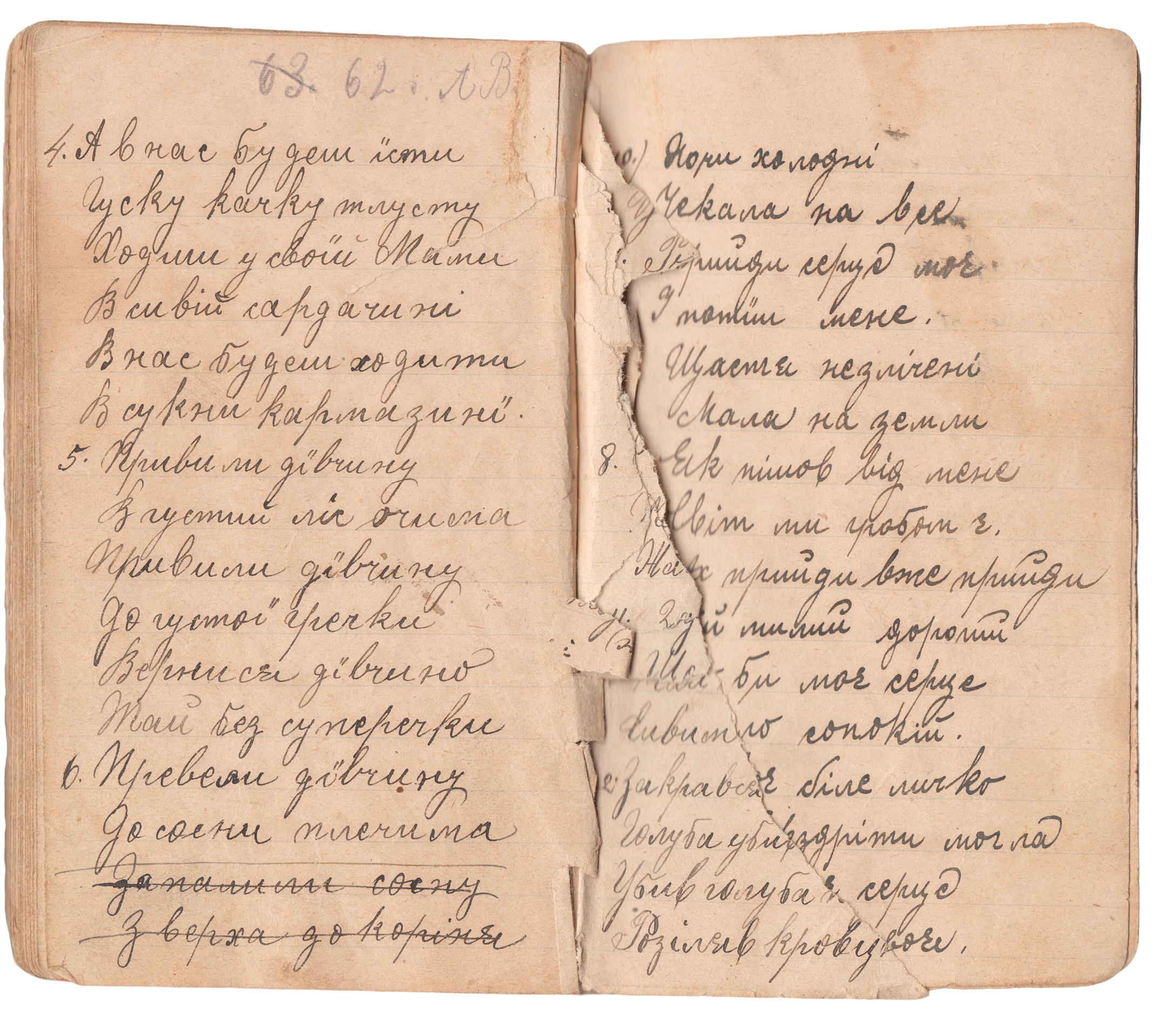
4. А в нас будем істи
уску кайку тмусту
Родим у своїй Мати
В сивій картацині.
В нас будем ходити
В сукни картацині”.
5. Привим дївину
З цутни лїс осика
Привим дївину
До цутої” ерекки
Вєрнисє дївино
Май без суперєрки
6. Привєди дївину
До сосни плєнита
________________
Данамили сосну
Звєрха до корінка
4. And in our place we will eat
a piece of pork neck and something
We will give birth at our Mother’s
In a gray cardigan.
In our place we will walk
In cardigan dresses”.
5. Bring the girl
Into the dense aspen forest
Bring the girl
To the “standing” church
Return, girl
Have no super skirt
6. Bring the girl
To the pine tree tight
________________
Sweep the pine
From above to the root
Series of pages torn out after this page
Core and theme of pages 63–62 (song fragment 4–6):
This is a short excerpt from a larger collection of Ukrainian folk songs (likely love, courtship, or wedding pisni). The core motif is the ritualistic “bringing” or “leading” of the girl/bride (привєди дївину / Привим дївину) into symbolic natural or domestic spaces.
Overall theme: Courtship and marital union framed through nature imagery. Trees (aspen, pine) often symbolize femininity, endurance, or the marital home in Ukrainian folklore. The repeated “bring the girl” formula is typical of wedding songs where the groom’s party “fetches” the bride. The tone mixes playful domesticity with ritualistic seriousness — a blend of earthy village life and poetic longing.
Interpretation of the crossed-out section:
In song 6, after “До сосни плєнита” (To the tight/pine-clad pine), there is a clear horizontal line and the heavily crossed-out phrase “Данамили сосну” before continuing with “Зверха до корінка”.
This looks like a classic self-correction by the writer:
Such corrections are very typical in personal notebooks of folk songs — the scribe was transcribing from memory or oral performance and fixed an error on the spot. It shows the text was living and actively edited rather than copied from a printed source.
“ЛВ” in the header “63. 62. ЛВ” are the initials of the singer/informant.
In early 20th-century Ukrainian handwritten folk-song notebooks (called pisenniki), it was standard practice for the collector/transcriber to write:
“ЛВ” therefore identifies the specific performer whose repertoire is recorded on these two facing pages. This system allowed the collector to keep track of which songs came from which singer across the entire collection.
(The person who actually wrote the notebook down usually signed the individual songs at the end with the name “Неспіш” / “Hnespish” — most likely the collector himself.)
So in short: ЛВ = the singer’s personal initials (e.g. Л[юба / Лариса / Лев] В[…]), not part of the song text itself.
The pencil vs. ink distinction tells us this is a working field notebook created in two distinct stages:
What this reveals:
This workflow is typical of folklorists collecting large repertoires from multiple singers: record first, organize/index later.