8.
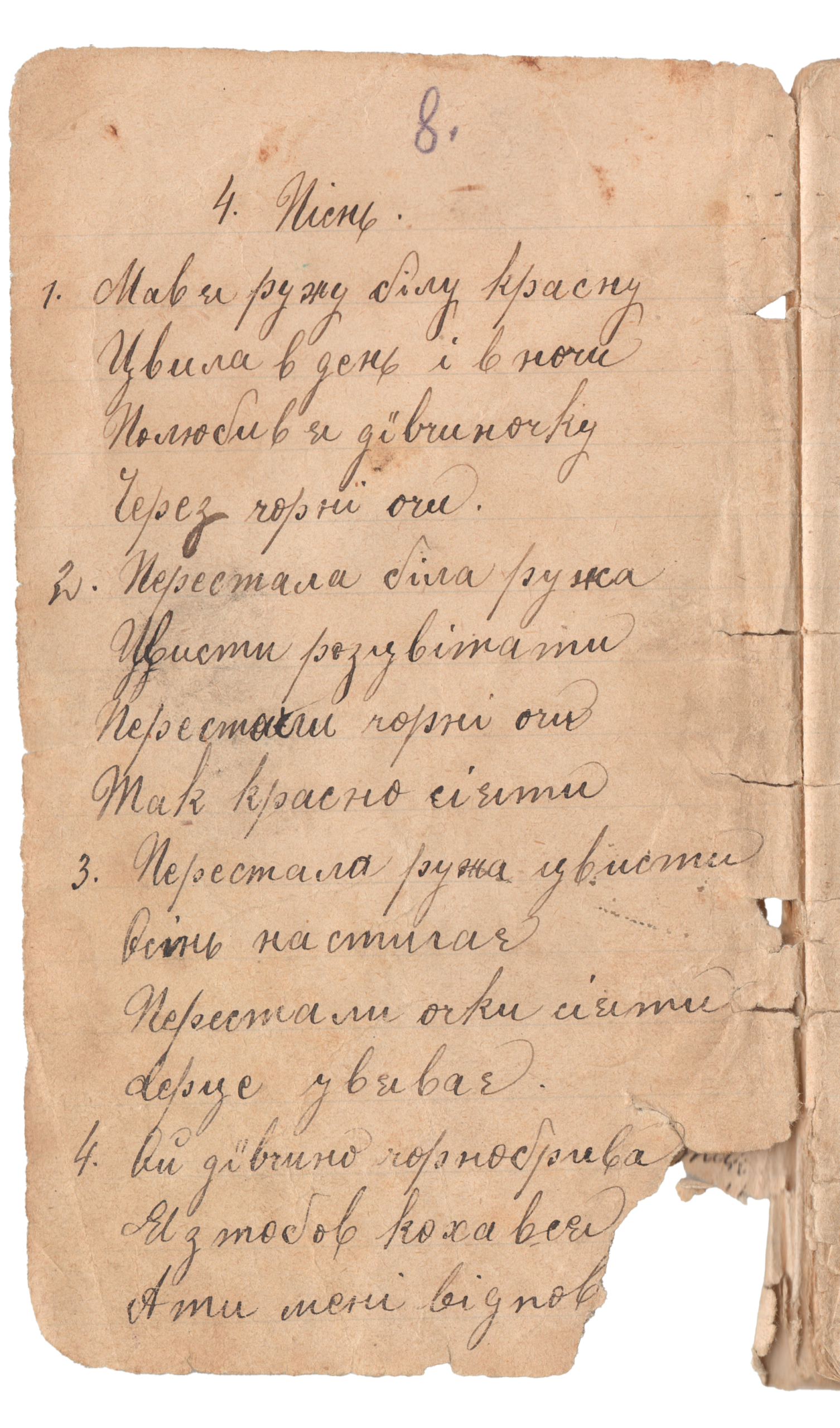
4. Піснь .
1. Мав я ружу білу красну
Увила в день і в ночі
Полюбив я дівчиночку
Через чорні очі .
2. Перестала біла ружа
Увісти розцвітати
Перестали чорні очі
Так красно сіяти
3. Перестала ружа увісти
Всім настала
Перестали очі сіяти
Серце убиває .
4. Ві дівчино чорноока
А з моїх коха вей
А ти мені вігнов
8.
4. Song .
1. I had a white beautiful rose
It wilted in the day and at night
I fell in love with a little girl
Because of her black eyes.
2. The white rose stopped
Blooming and flourishing
The black eyes stopped
Shining so beautifully
3. The rose stopped blooming
It became for everyone
The eyes stopped shining
The heart is killing.
4. Hey dark-eyed girl
And with my love [vey]
And you rejected me
The song is a classic Ukrainian folk-style love lament that uses two central metaphors—a blooming white rose and a girl’s striking black eyes—to tell the story of falling deeply in love and then watching that love wither and die. The rose stands for the pure, vibrant passion the singer once felt (it bloomed “day and night”), while the black eyes represent the irresistible attraction that drew him in. By the end of the song, both symbols have faded: the rose no longer blooms, the eyes no longer shine, and the singer’s heart is literally “being killed” by the pain.
Main Theme: Heartbreak caused by the fleeting, temporary nature of love. The singer realizes that everything beautiful eventually fades—“its time has come for all”—and he is left grieving the loss of the girl’s affection (or perhaps her rejection). The direct address at the end (“You black-browed girl… and you answered me…”) hints that she may have given him some response that sealed the emotional wound.
It’s a bittersweet meditation on how love can start as something radiant and life-giving, only to end in quiet devastation, a very common motif in traditional Ukrainian romantic songs. The whole piece feels like a gentle, sorrowful sigh rather than dramatic anger—just quiet acceptance of love’s impermanence.