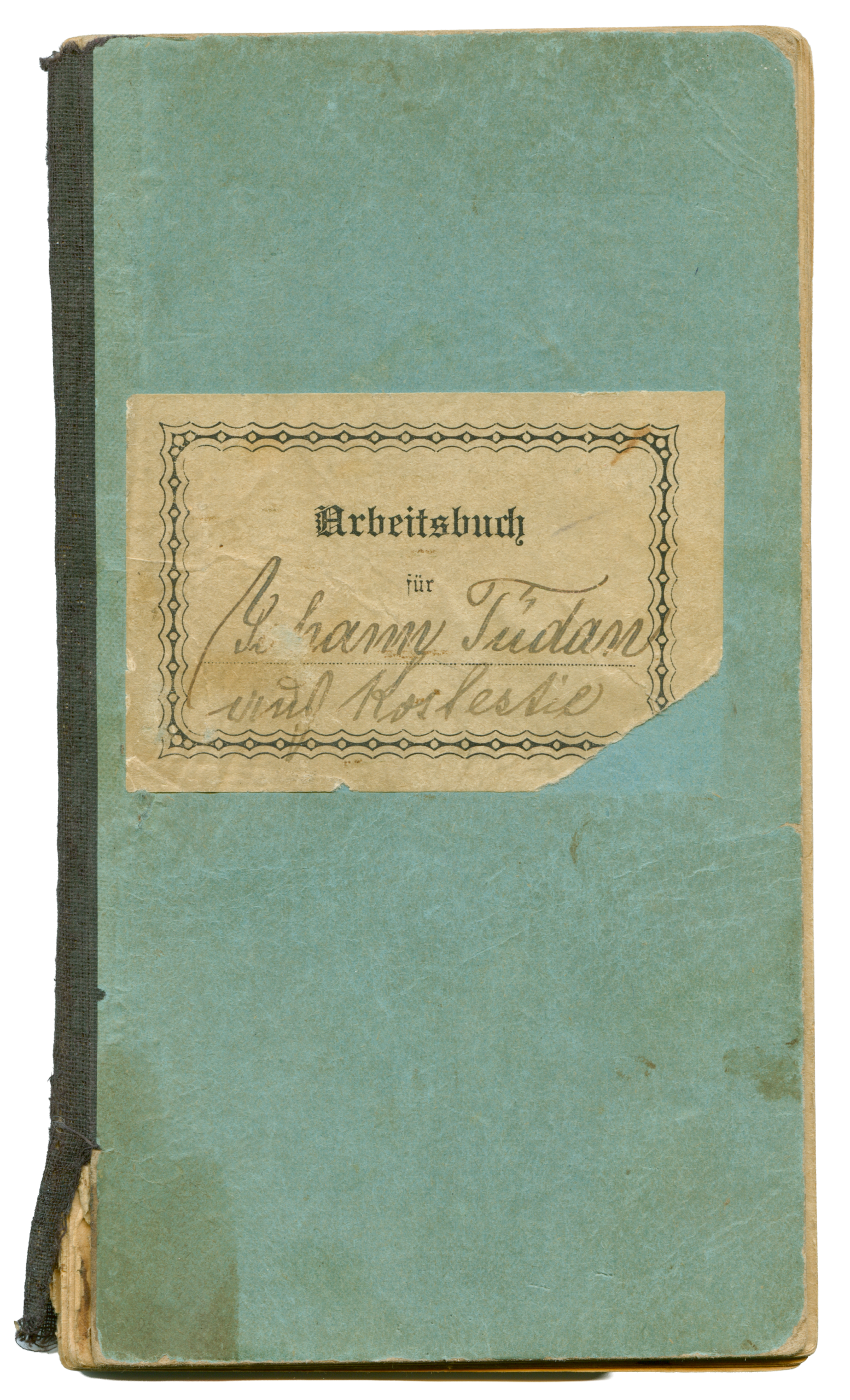
Detailed village-specific history for such a small place is hard to find in English-language sources (it was likely too minor to have its own dedicated records online). The Arbeitsbuch itself is one of the rare surviving documents tying a real person (Johann Tudam, born 1887) directly to Koselkie.
Historical Context
This is a perfect example of how everyday life in the late Austro-Hungarian Empire intersected with modern state bureaucracy around 1909–1910.
The printed German page (p. 75) comes directly from the Gewerbeordnung (Trade/Industrial Code), the key law regulating crafts, factories, and labor across the empire. §§ 79–80 required every “Hilfsarbeiter” (auxiliary/unskilled worker or apprentice) — especially young people — to carry an official Arbeitsbuch (work book). It served as:
Local municipalities issued the books (stamp-free, for a small fee), and employers had to note details of each job. Violating the rules could mean fines. This system was part of the empire’s push to modernize and regulate the exploding industrial and craft economy while protecting (and tracking) rural youth flooding into towns.
These pages are exactly that document — the personal Arbeitsbuch of Johann Tudam (German/Austrian spelling), born 1887 in Kostesti/Kostel (a small Ruthenian/Ukrainian village in Bukovina, today’s Chernivtsi region of Ukraine, then part of Austria-Hungary). The school report elsewhere in the collection (for “Mykhailo Ioan,” born 5 January 1887) almost certainly belongs to the same person or a very close relative — typical bilingual naming practices in the multi-ethnic borderlands (Ukrainian/Ruthenian first name + German official name).
Instead of dry employment entries, the owner filled most of the book with handwritten religious verses. This was extremely common: official notebooks often became treasured personal anthologies for semi-literate rural people. They copied beloved oral traditions — love songs, historical ballads, prayers, and moral verses — turning a bureaucratic tool into a kind of private cultural treasure. Dates like 2/I 1909 and signatures (e.g., “Hnesenzuk,” “Tudan”) show it was actively used right around his early twenties, just before World War I shattered the empire.
In short: this little blue book captures the tension and richness of life in Austria-Hungary’s eastern provinces on the eve of its collapse — a young Ukrainian peasant navigating new state paperwork while preserving the songs and faith of his village world. It’s a rare, intimate survivor of both imperial labor law and everyday folk culture.