23.
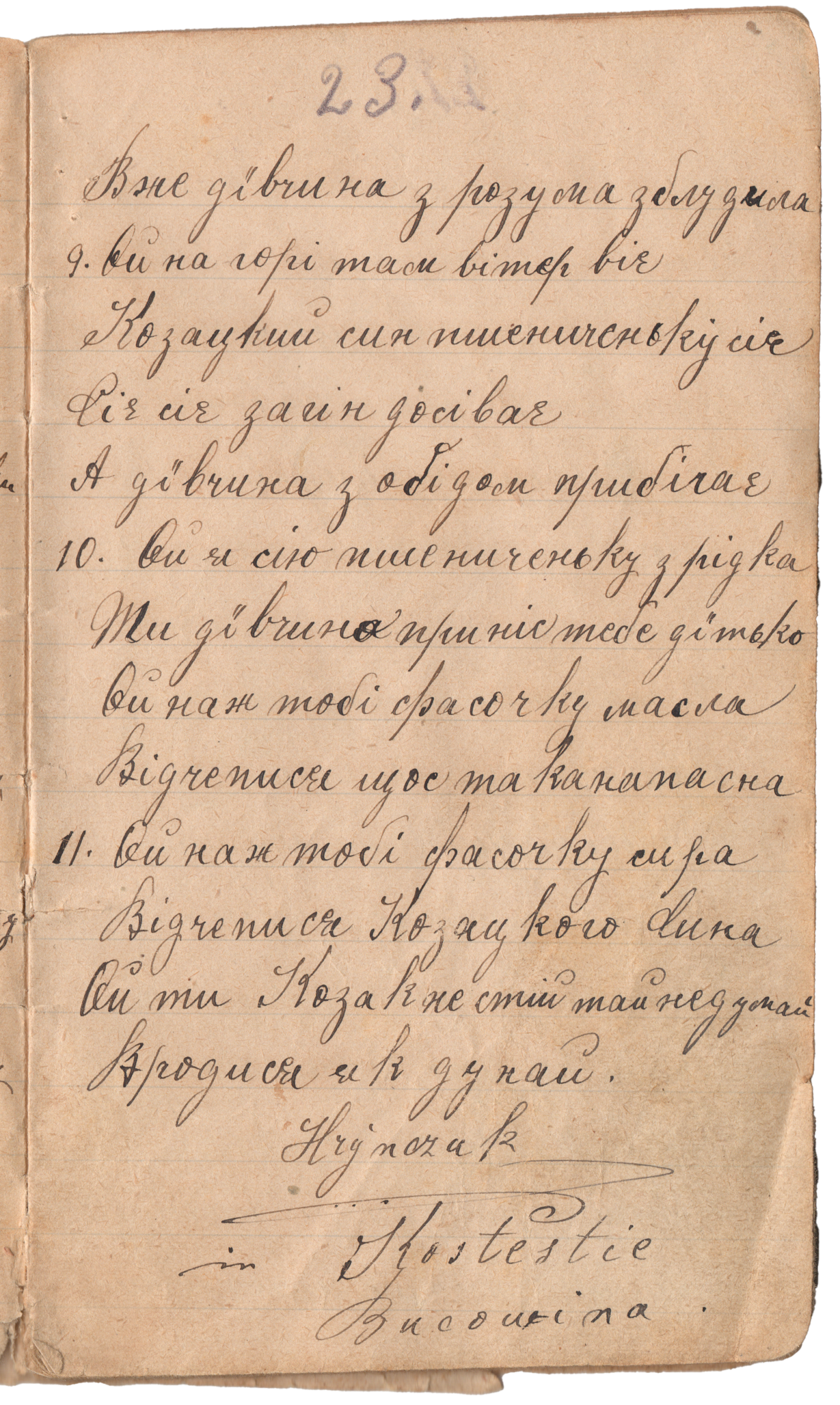
Вже дівчина з розума збу джила
9. Ви на горі таи вітер віє
Козацкии син пише неньки
Сір сір за ии досіва
А дівчина з одігом прибиває
10. Ви я сію пише неньку з рідка
Ти дівина приніс тебе дівко
Ви на ж тобі сра сорку масла
Відренися щоє та капа насна
11. Ви на ж тобі фасорку сира
Відренися Козац кого сина
Ви ти Козаки не стій таи не дмаи
Вродися я к д у наи .
Ку козак
in Hostestie
Височина
23.
The girl has already been driven out of her mind
9. On the mountain there the wind is blowing
The Cossack son writes to his mother
Sowed sowed and she is sowing
And the girl with the hem comes running
10. I am sowing, the mother writes from afar
You girl, you brought yourself girl
Here for you a bowl of butter
Deny that it is so and so
11. Here for you a bowl of cheese
Deny the Cossack son
You Cossack, do not stand and do not think
Be born like to us.
Cossack
in Hostestie
Bucowina
Core of the poem (song):
This is a classic Ukrainian folk pisnia (song) about seduction through alcohol and nature. The male speaker playfully tempts a girl with mead and horilka (Ukrainian vodka), promising to lead her “out of her mind” (z rozuma zvesty) under the white birch and fir trees — traditional symbols of purity and youth in Slavic folklore. He brags that he will make her “not sober” and turn her into a “young maiden,” a clear metaphor for losing innocence or virginity. The girl resists at first (“the girl did not drink horilka”), but the song ends with her already “driven out of her mind,” showing that desire and drink have won.
The second half shifts to a Cossack son writing to his mother while “sowing,” with the girl running to him with butter and cheese — playful rural courtship imagery. He teases her to “deny the Cossack son,” but the tone remains light and flirtatious rather than tragic.
Main themes:
Overall it’s a lively, slightly naughty folk lyric meant to be sung, full of humor, double meanings, and everyday rural life — typical of the handwritten songbooks young people kept in Ukrainian villages around 1909. The tone is playful rather than moralistic; the “fall” into love (and drink) is celebrated, not condemned.