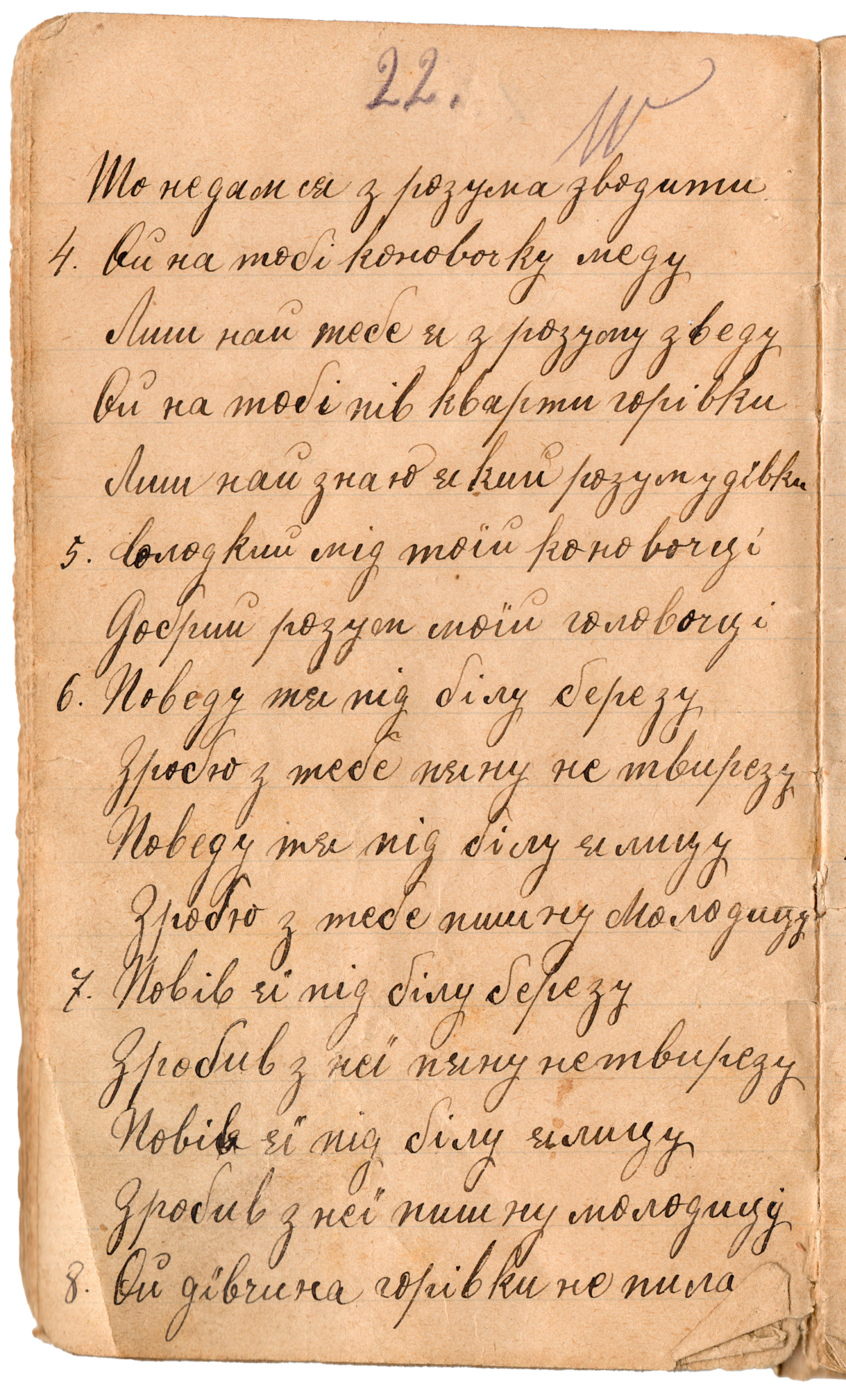
22.
То недаи ся з розума зводити
4. ви на тобі коновочку меду
Лиши най тебе и з розума зведу
ви на тобі пів кварти горівки
Лиши най знаю и кинь розуму дівки
5. Солодкий мід тобі коновочці
Добрий розум моїй коновочці
6. Поведу ти під білу березу
Зробю з тебе пину не твирезу
Поведу ти під білу ялину
Зробю з тебе пину молодицу
7. Повів іі під білу березу
Зробив з неї пину не твирезу
Повів іі під білу ялину
Зробив з неї пину молодицу
8. Ои дівчина горівки не пила
22.
Do not let yourself be led out of your mind
4. You have a little jug of honey for you
Just let me lead you out of your mind too
You have half a quart of horilka for you
Just let me know who took the girl’s reason
5. Sweet honey in your little jug
Good reason in my little head
6. I will lead you under the white birch
I will make you foam, not sober
I will lead you under the white fir
I will make you foam, a young girl
7. He led her under the white birch
He made foam from her, not sober
He led her under the white fir
He made foam from her, a young girl
8. Oh the girl did not drink the horilka
Core of the poem (page 22): This is a short, playful Ukrainian folk song (писня) about seduction and the loss of a young girl’s innocence. A man tempts a girl with sweet mead (мід) and strong horilka (горівка), promising to “lead her out of her mind” (з розума зводити). He then takes her under a white birch and a white fir tree, where he “makes foam” of her — a clear erotic euphemism for sexual climax or passionate intoxication — turning her from a girl into a “young woman” (молодицю). The song shifts from future tense (“I will lead you…”) to past tense (“He led her… He made…”), telling the story as something that has already happened. It ends on a wry note: the girl didn’t even drink the horilka, implying she didn’t need alcohol to be seduced.
Main themes:
Overall, it’s a light-hearted, slightly bawdy folk lyric about youthful passion, common in early 20th-century Ukrainian song collections like the one in this notebook. The tone is teasing rather than moralistic — more celebration of desire than warning.