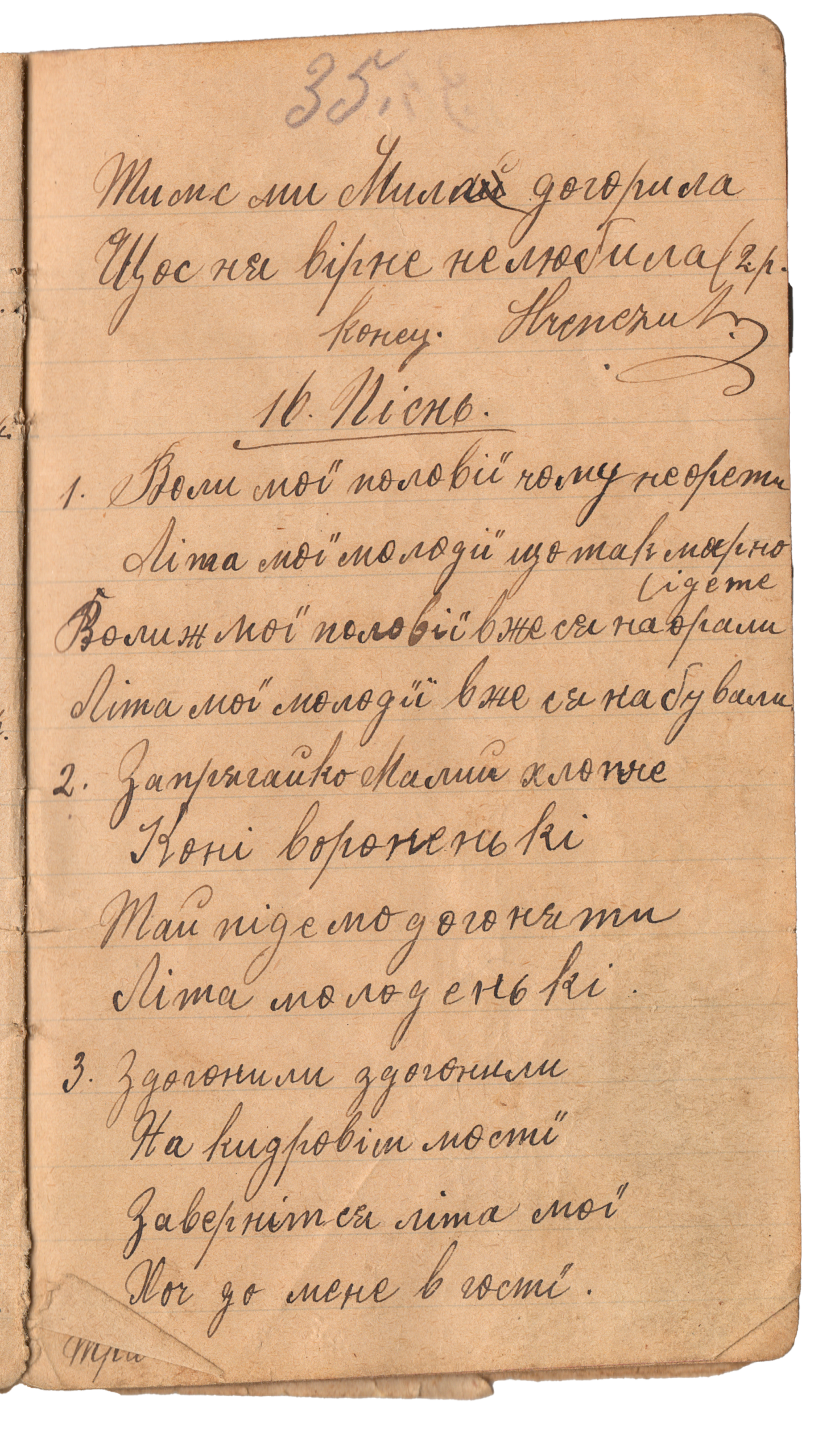
35.
Циме ми Милай догорша
Цос ня вірне нелюбила(2р.
конец. Непевнъ
16. Піснь.
1. Воли мої полові кому неорети
Літа мої молоді цо так меркно
сієте
Воли мої полові вже ся набрали
Літа мої молоді вже ся набули
2. Запрягайно Милий хлопче
Кони вороненькі
Май піде мо догоняти
Літа молоденькі .
3. Здогонили здогонили
На кидровім мості
Заверніт ся літа мої
Мо до мене в гості .
35.
This is how my dear one has spoken
Why have you not loved me faithfully (2x.
End. Uncertain
16. Song.
1. My brown oxen, who will not plow them
My young years, why do they pass so quietly
sow
My brown oxen, they have already been harnessed
My young years, they have already been used up
2. Harness them, my dear boy
Black horses
Let’s go catch up
Young years .
3. They caught up, they caught up
On the cedar bridge
Turn back, my years
Come visit me as a guest.
Core of page 35 (Song 16): This is a classic Ukrainian folk-style lament in which the speaker mourns the irreversible loss of youth (“літа молоді” — young years/summers). The song opens with a direct echo of the previous piece (“This is how my dear one has spoken / Why have you not loved me faithfully”), then shifts into the main theme: time has slipped away while the speaker was busy with life’s labors, and now they desperately wish to recapture or at least briefly revisit those vanished youthful days.
Central theme — the fleeting nature of youth and the pain of belated longing: The entire song is built around a single, aching metaphor:
The imagery is deeply folkloric — agricultural labor, swift horses, a wooden bridge — yet the emotion is universal: nostalgia mixed with quiet despair. Youth cannot actually return; the best the speaker can hope for is a momentary, ghostly visit. That bittersweet wish is the emotional heart of the page.
The tone is melancholic and reflective, typical of early-20th-century Carpathian or Galician song-poetry. It blends personal regret (the “Mila”/beloved motif) with a broader meditation on time’s one-way flow, making the short song feel both intimate and archetypal.
In short: page 35 captures the universal ache of realizing too late that youth has passed you by, and the futile yet deeply human desire to call it back for just one more evening.