36.
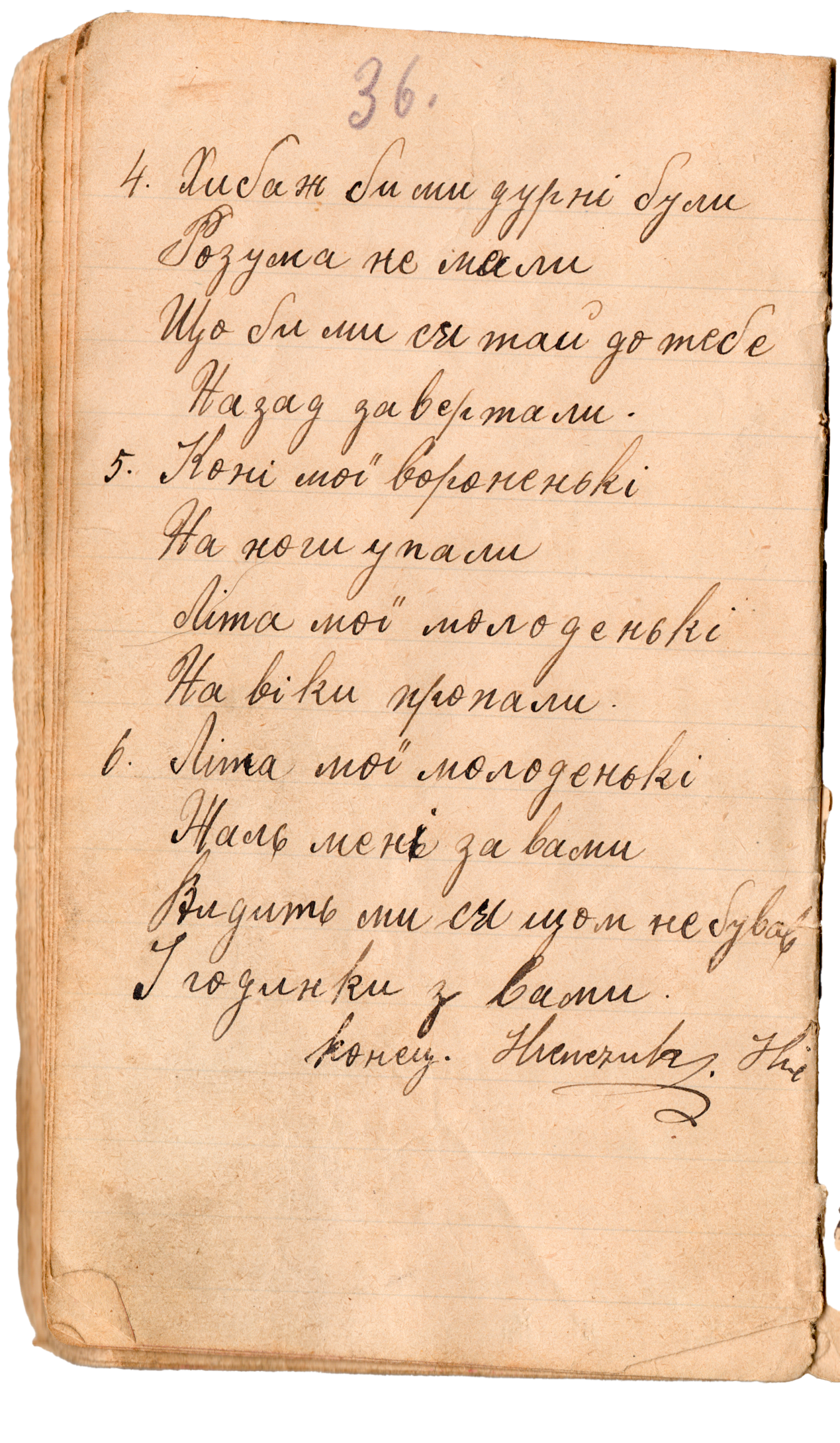
4. Лисан си ми дурні були
Розума не имели
Що си ми си май до тебе
Назад завертали .
5. Кони мої” вороненькі
На коні упали
Літа мої” молоденькі
На віки пропали .
6. Літа мої” молоденькі
Намь мені за вами
Видить ми си щом не бува
Годинки з вами .
Конец. Непензъ. Ні
36.
4. They wrote me foolish thoughts
They had no reason
What we had we secretly to you
Turned back .
5. My raven horses
Fell on their legs
My young years
Perished for ages .
6. My young years
For me behind you
It seems to me as if it never was
The hours with you .
End. Nepenz. Ni
Core of page 36: This is a short, self-contained lament (stanzas 4–6 of what appears to be a longer song or cycle) in which the speaker looks back on a youthful love affair with deep regret and a sense of unreality. The voice is personal and confessional, typical of Ukrainian/Rusyn folk-lyric poetry.
Main theme: The irreversible loss of youth and the illusory nature of past love.
The speaker realizes that the “foolish thoughts” (дурні були) and secret feelings he once directed toward “you” (си тай до тебе) were pointless; they only led him backward instead of forward. The central metaphor is the “raven horses” (вороненькі кони) — symbols of youthful vitality and freedom — that have now “fallen on their legs,” meaning the prime of life has collapsed. The repeated refrain “Літа мої молоденькі” (My young years) personifies youth itself as something that has slipped away forever (“На віки пропали”) and now feels almost imaginary (“Видить ми си щом не бува / Годинки з вами” — “It seems to me as if those hours with you never even happened”).
In essence, the page captures the classic folk-song motif of post-romantic disillusionment: time has passed, the passion has faded, and what once felt vivid now seems like a dream that may as well have never existed. The final “Конец. Непензъ. Ні” (End. Nepenz. Ni) is the scribe’s note that this particular song or section is finished, underscoring the finality of both the poem and the lost youth it mourns.