41.
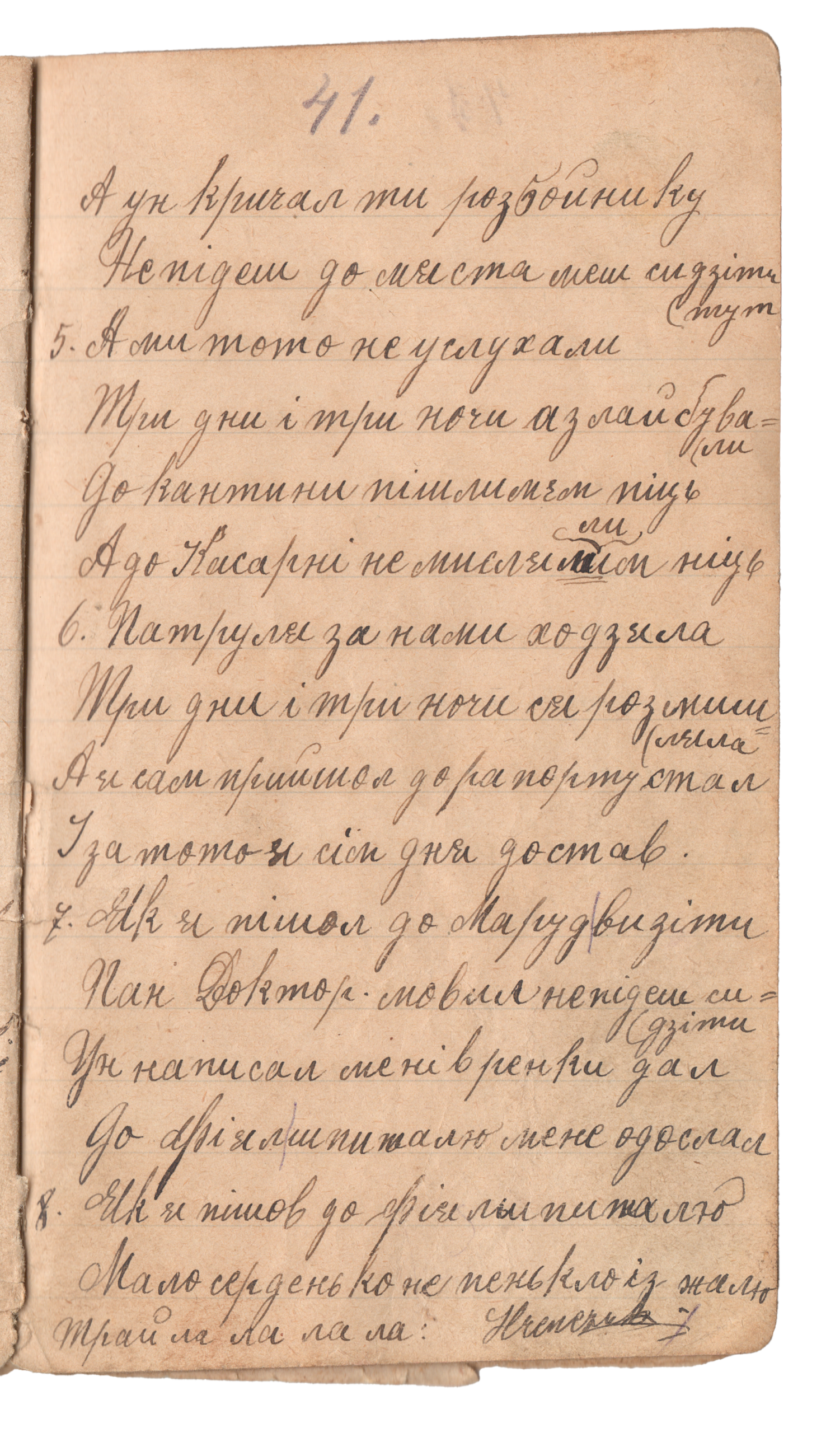
А ун кригал ти розбойнику
Непідем до сиєста мєи сидзіти
(Смут)
5. А ми тото не услухали
Три дни і три ночі а злайдува-
До Ґантинни пішли ми піц
А до Касарні не мислили піц
6. Патрули за нами ходзила
Три дни і три ночі ся розмили
А я сам прийшов до рапорту стал
За тото я сіи дни достав.
7. Як я пішов до Марудвизіти
Пан Доктор. мовил непідеш си-
Ун написа л мені в ренки дал
До офіцишталю мене одослал
8. Як я пішов до офіцишталю
Мало серденько не пекло із жалю
Трай ла ла ла ла:
Непензь.
41.
And he shouted at you, robber
We won’t go to the siesta, we will sit
(Sad)
5. And we did not listen to that
For three days and three nights we wandered
To the guardhouse we went on foot
And to the barracks we did not think to go
6. Patrols followed us
For three days and three nights they scattered
And I myself came and stood for the report
For that I got these days.
7. When I went to the Marud review
Mr. Doctor said you won’t go si-
He wrote and gave me in the hands
He sent me to the hospital
8. When I went to the hospital
My little heart almost burned from sorrow
Trai la la la la:
Nepenz.
Core of page 41 (stanzas 5–8 of the song):
This is a raw, first-person soldier’s lament. A young man (the “I” of the song) openly defies an officer who calls him a “robber.” Instead of obeying orders to rest or report properly, he and his companions wander for three full days and nights. They head to the guardhouse on foot but deliberately avoid the barracks. Patrols hunt them the whole time. When the singer finally turns himself in for the report, he is immediately punished (“these days” = extra duty or confinement). He is then sent for a medical review; the doctor refuses to excuse him from service, writes an order, and ships him off to the military hospital. The song ends with the singer’s heart “almost burning up from sorrow” and a light, ironic “Trai la la la la” refrain — the classic folk way of masking deep pain with a sing-song shrug.
Main themes:
In the larger notebook this fits perfectly with the other soldier songs (desertion, longing for “Mila,” mothers, Cossack life). Page 41 is one more chapter in the same story: the pain of being young, male, and trapped in uniform at the beginning of the 20th century.