46.
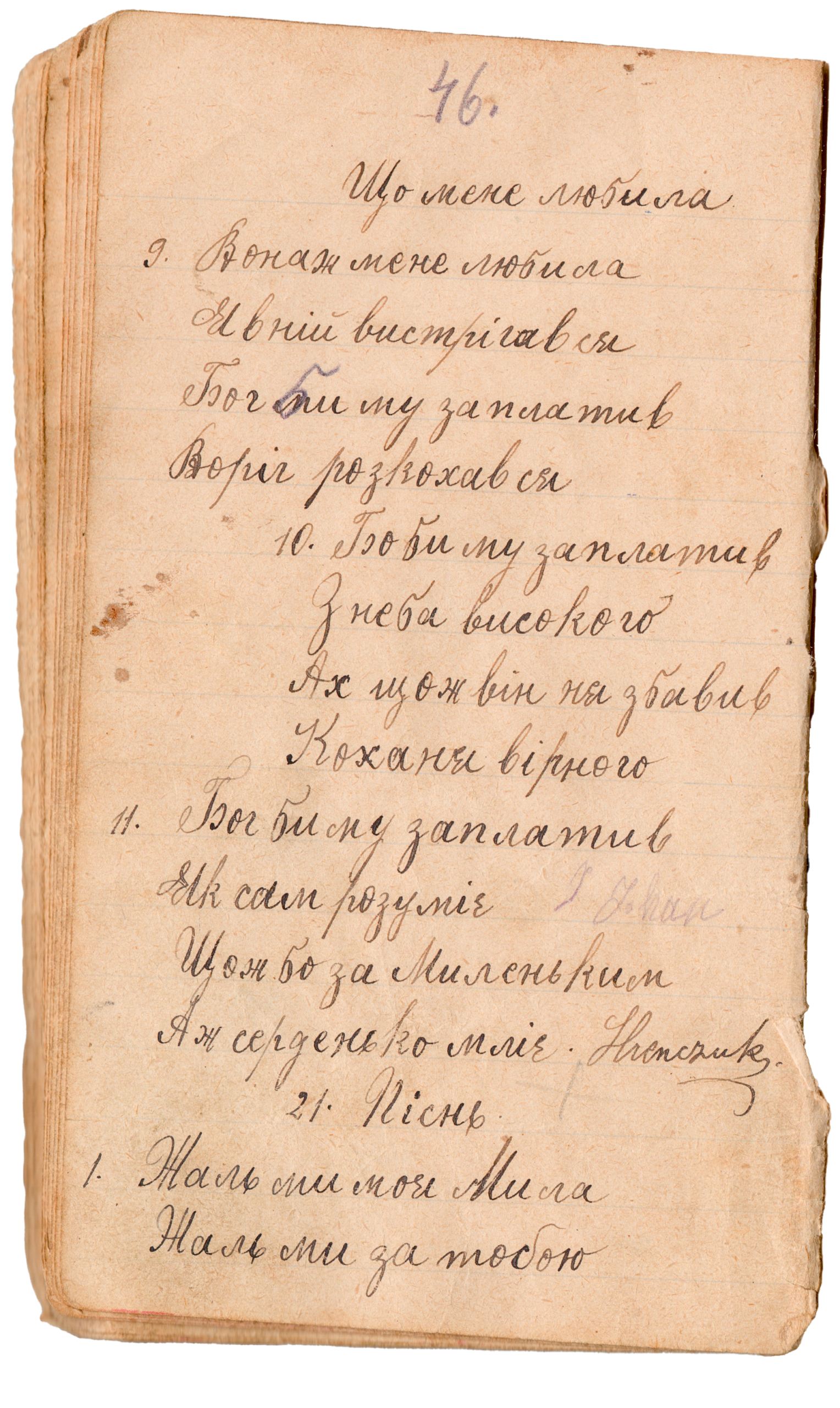
Що мене любила
9. Вонаж мене любила
И вній вистригав ся
Бог би му заплатив
Воріг розкохав ся
10. Тоби му заплатив
З неба високого
Ах щож він ня збавив
Коханни вірного
11. Бог би му заплатив
Як сам розуміє
Що ж бо за Миленьким
Аж сердечко мліє. Нпепзпб.
21. Піснь
1. Жаль ми моє Мила
Жаль ми за тобою
46.
What loved me
9. She loved me too
And he got his hair cut in it
God would pay him
The enemy fell in love
10. You would pay him
From the high sky
Until he deprived me of it
Of the faithful lover
11. God would pay him
As he himself understands
What for my dear one
My little heart aches. Npепзпб.
21. Song
1. Pity my dear
Pity for you
Core message: The speaker reflects on a deep, genuine love that has been betrayed or stolen by a rival (“воріг” – the enemy). They recall the beloved’s affection (“Вонаж мене любила”), lament the rival’s intrusion, and bitterly call on God for justice and repayment (“Бог би му заплатив”). The verses overflow with personal heartache (“аж сердечко мліє”) and end by beginning a new song of pure sorrow (“Жаль ми моє Мила / Жаль ми за тобою” – Pity me, my dear / Pity for you).
Main theme: Romantic betrayal, jealousy, and the pain of lost love in the classic Ukrainian folk-song style. The page captures the universal folk motif of a loyal heart shattered by a rival, mixed with a plea for divine retribution and raw emotional longing. It’s a quintessential lament (pisня) about fidelity, heartbreak, and the ache of separation—common in traditional Ukrainian love poetry of the era.
The two song fragments on this single page reinforce the notebook’s larger pattern: intimate, heartfelt expressions of love’s joys and (far more often) its crushing sorrows. No other themes (nature, war, religion as primary focus) appear here; everything circles back to personal romantic suffering.