52.
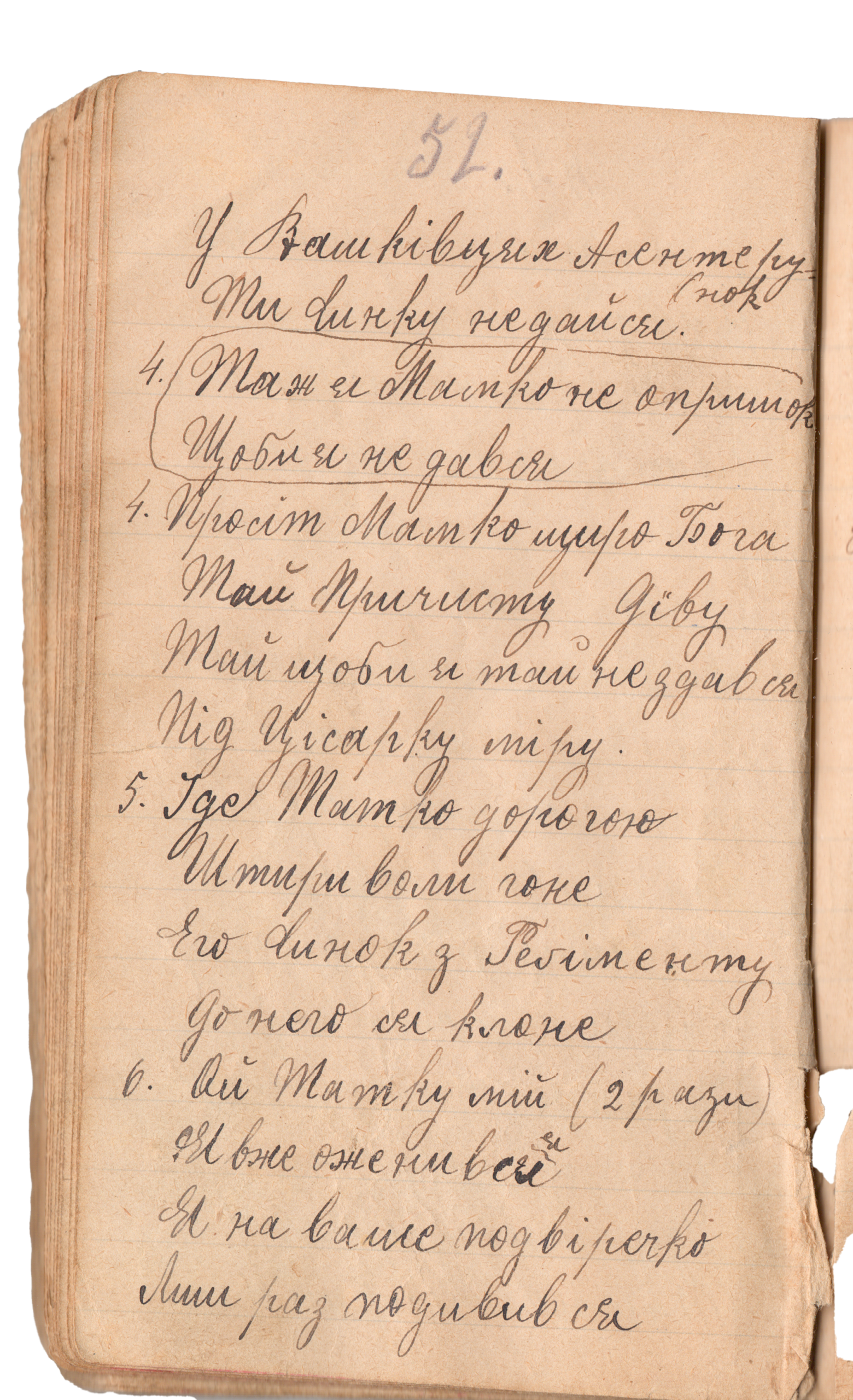
У Вашківцях Асентеју
Ми динку недайси.
4. Мая и Маико не опримо
Щоби и не давси
4. Уросіт Мамко щиро Бога
Май Причисту діву
Май щоби и май не здавси
Ніг Уісарку міру.
5. Іде Матко дорогого
Мтири воли гоне
Его динок з Регіменту
До него ся клонє.
6. Ой Матку мий (2 рази)
Увже оженивси
И на ваше подвіреко
Лишь раз подививси
52.
In Vashkivtsi to the sergeant
We will not give the daughter.
4. May and Mayko do not accept
So that he does not give either
4. Ask Mother sincerely of God
May the Immaculate Virgin
May so that he does not give and may not give
Under the Hussar measure.
5. The mother goes the long way
Drives four oxen
His son from the Regiment
Bows to him.
6. Oh my Mother (2 times)
And already got married
And to your little yard
He only looked once.
Core of page 52:
This is a short folk-song stanza (likely a kolomyika-style or wedding ballad) in which a family (specifically the mother, addressed as “Mati” / “Maiko” / “Matko”) firmly refuses to give their daughter (“dívčina” / “dinka”) in marriage to a soldier — here called the sergeant (“Asentej”) or hussar from the regiment. The mother invokes God and the Immaculate Virgin for help, drives four oxen on a long journey, and the son (already in military service) only “looks once” at their yard. The repeated refrain “Oh my Mother (2 times)” underscores the emotional weight of the decision.
Main theme: Parental / familial resistance to a military suitor.
It captures the classic tension in Ukrainian rural folk poetry between village life and the army: the daughter is seen as too precious to be “given under the hussar measure” (i.e., handed over to a soldier’s uncertain, mobile life). There is a strong undercurrent of protective maternal love, faith as a source of strength, and the clash between peasant stability (oxen, yard, home) and military transience. The song subtly laments how quickly young men are pulled into service and how families try to shield their daughters from that world.