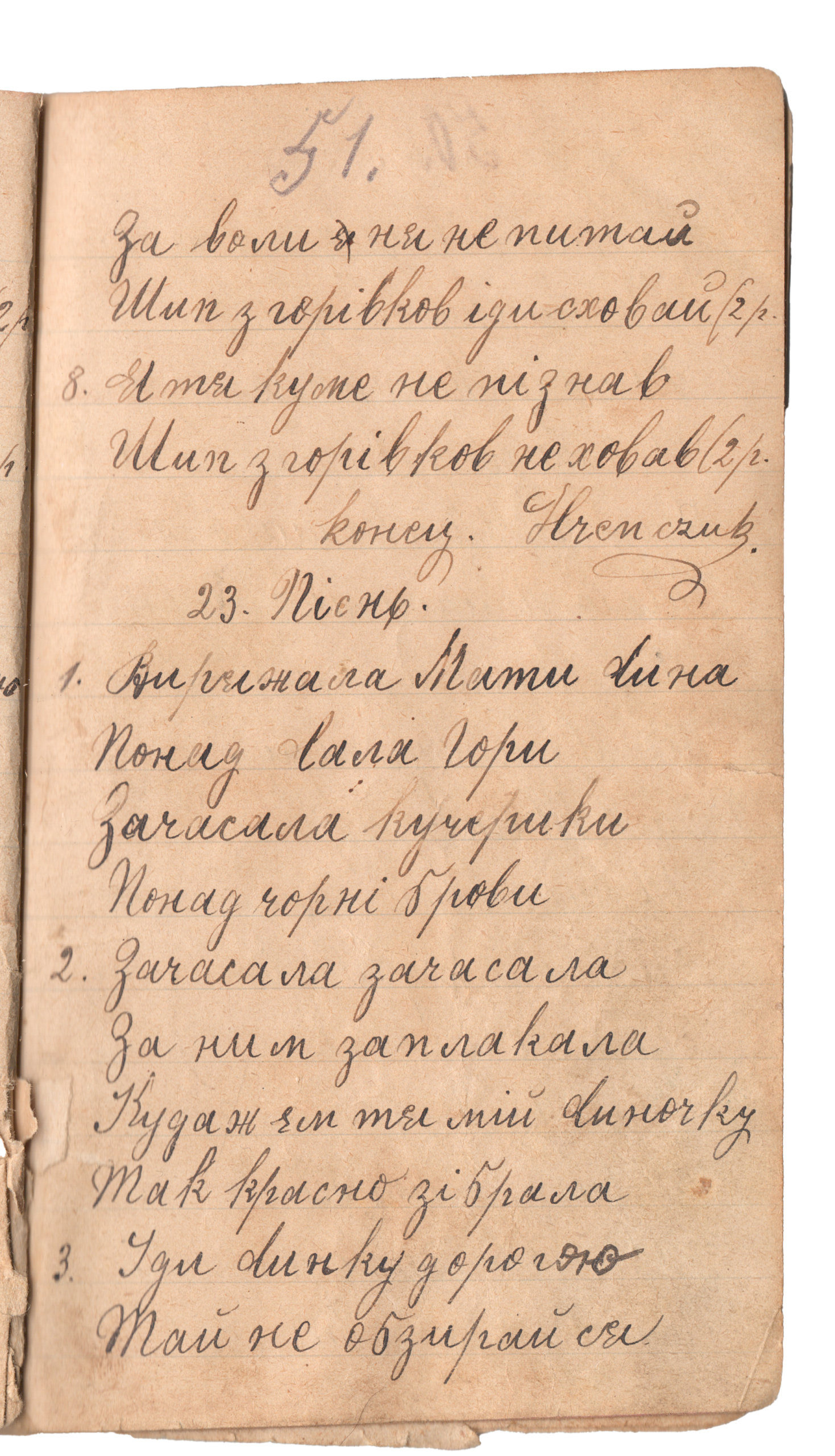
51.
За воли я ния не питай
Шип з горівков іди сховай(2р.
8. И ти куме не пізнав
Шип з горівков не ховав(2р.
конец. Неспізн.
23. Піснь.
1. Вирижнала Мати діна
Понад сала гори
Закасала кучерики
Понад чорні брови
2. Закасала закасала
За ним заплакала
Куда ж ти ти мій диночку
Так красно зібрала
3. Іди диночку дорогого
Май не обзирайся.
51.
For the oxen, don’t ask me about them at all
Shin, hide the horilka and go (2 times)
8. And you, godfather, didn’t recognize it
Shin didn’t hide the horilka (2 times)
The end. Signature?.
23. Song.
1. Mother gave birth to a daughter
Above the village, over the mountains
She tucked up her curls
Above her black eyebrows
2. She tucked them up, tucked them up
She cried after him
Where are you going, my dear son
You gathered so beautifully
3. Go, my dear son, on the road
Just don’t look back.
“Неспізн.” is the scribe’s handwritten note or signature (very likely an abbreviation or initials of the collector/owner)
The core of page 51 is a mother’s heartbreaking farewell to her child (the text mixes “діна”/daughter and “диночку”/dear son, but the emotional core is clearly a parent sending a beloved child into the world). The mother performs tender, ritualistic acts—tucking curls, arranging hair over black eyebrows—while weeping, then gives the final blessing: “Go… just don’t look back.”
The central theme is the pain of irreversible separation and the stoic acceptance that comes with it. This is a classic Ukrainian folk motif of maternal grief mixed with reluctant pride: the child is leaving home (possibly for marriage, military service, or work), beautifully prepared by the mother, yet the departure is final. The repeated “don’t look back” carries both protective superstition (don’t invite bad luck) and emotional warning (looking back would break the mother’s heart further). It captures the universal tension between love and letting go, rendered in raw, intimate folk style.