50.
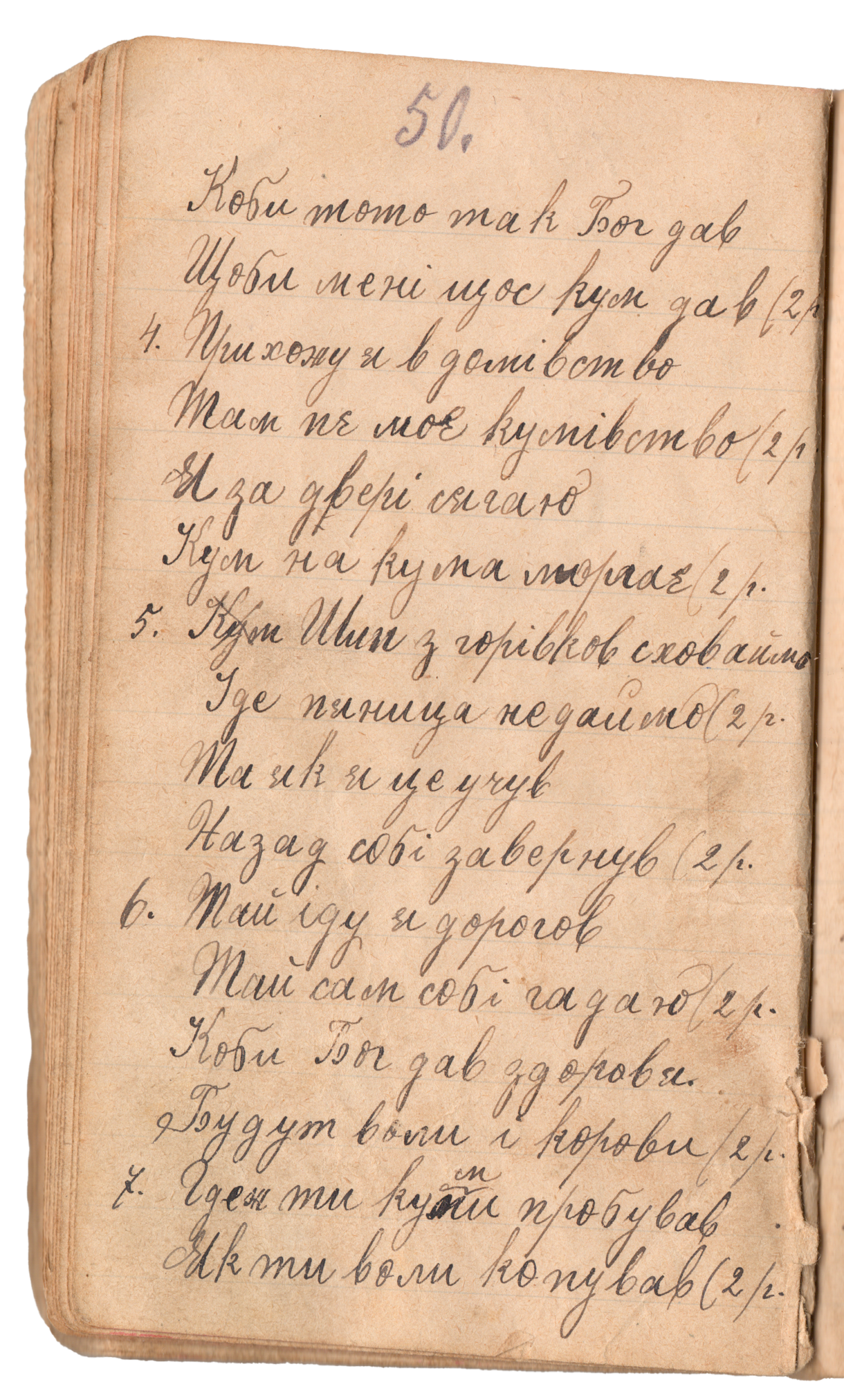
Коби мото так і Бог дав
Щоби мені щось куп дав(2р.
4. Ми хожу я в домівство
Мам не моє купівство(2р.
Я за двері сідаю
Кум на кума морда(2р.
5. Кум Шин з горівков сховав
Іде паница недаймо(2р.
Ма зк я це учув
Назад собі завернув (2р.
6. Май іду я дорогой
Май сам собі гадаю(2р.
Коби Бог дав здоровя.
Будут вони і корови(2р.
7. Ідеш ти кум пробував
Як ти воли конував(2р.
50.
If only it were so and God gave
So that He would give me something to buy (2 times.
4. I walk into the household
Mom, it’s not my purchase (2 times.
I sit behind the door
Godfather to godfather’s face (2 times.
5. Godfather Shin hid with liquor
The lady goes, don’t give it (2 times.
As soon as I heard this
I turned back to myself (2 times.
6. I go my way
I think to myself (2 times.
If only God gave health.
They will have cows too (2 times.
7. You go, godfather, you tried
How you bought the oxen (2 times.
Core of the song (page 50): This is a short, repetitive folk narrative in the voice of a rural Ukrainian man (likely a peasant or small farmer). He walks along, thinking aloud about a recent trip or errand. He recalls entering someone’s household, a botched or regretted “purchase” (probably livestock — oxen or cows), a hidden bottle of liquor (“горівка”), a quick eavesdropping moment, and turning back home. The song ends with a prayer-like wish for health so that “they” (the family or the animals) will thrive, plus a humorous aside about how the godfather (“кум”) once tried to sell or trade oxen. It feels like a light-hearted, slightly ironic slice-of-life confession — the kind of story people would sing while working or drinking.
Main theme: Everyday peasant life under God’s will. The singer accepts that fate (and God) decides whether deals succeed, whether health holds, and whether the household prospers. There’s a gentle mix of resignation, self-mockery, and hope: “If only God gave health…” The repeated “(2р.)” markings show it’s meant to be sung chorally or with a refrain, typical of Ukrainian village songs that turn small personal mishaps into shared, singable wisdom.
In short: a folksy, conversational meditation on life’s little bargains, hidden vices, and the constant prayer for strength to keep the farm and family going. Classic early-20th-century Ukrainian rural lyric.