59.
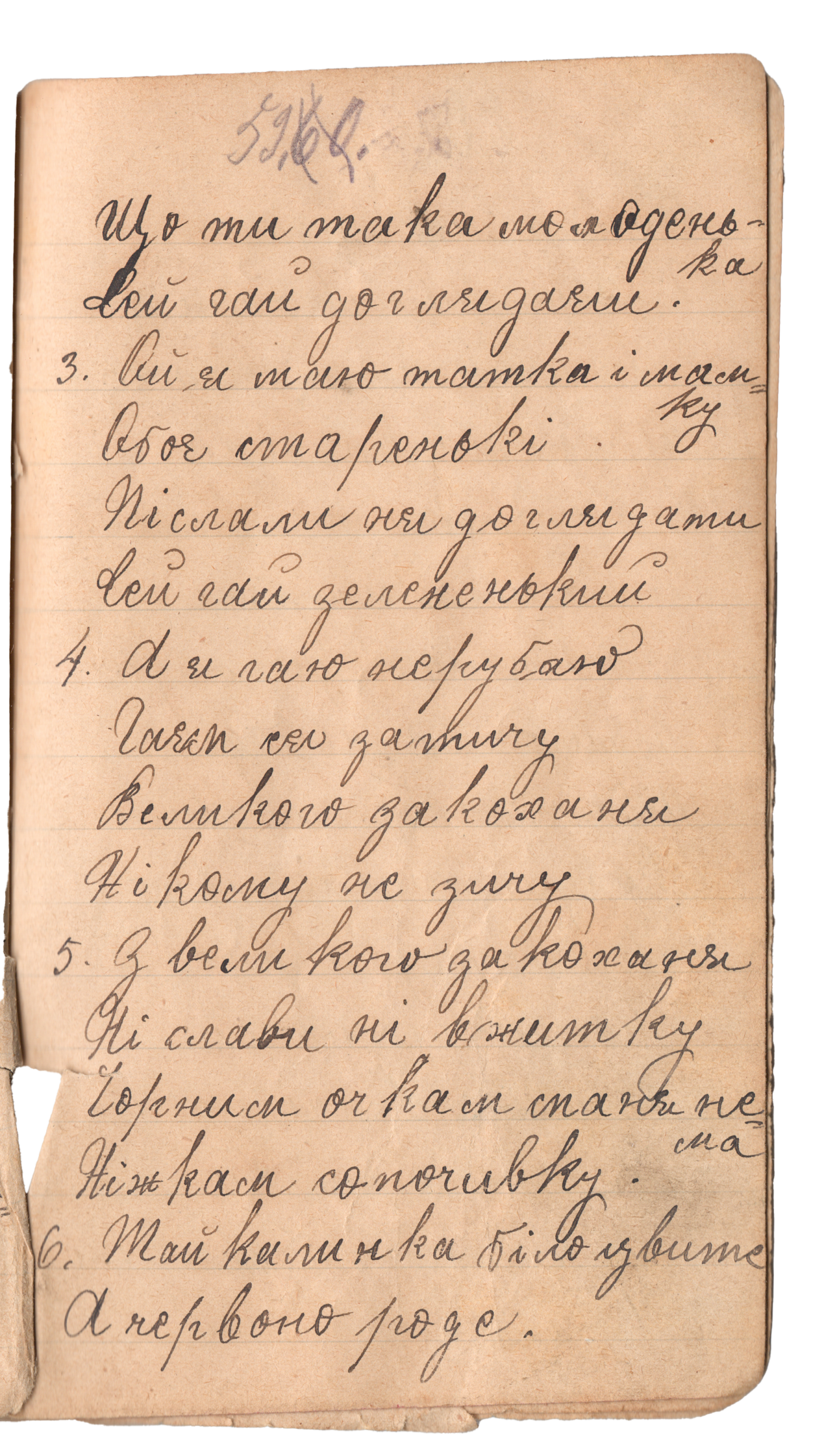
Що ти така молодень-
ка
лей гай доглядаи.
3. Аи я маю татка і мам-
ку
обоє старенькі.
Післяли ни доглядаи
лей гай зелененький
4. А я паю серу бань
Вакн си за гниу
Великого за коханя
Ні кому не зичу
5. З вели кого за коханя
Ні слави ні вжитку
Іорни си о к аи стаи не
Ніж кас сопоибку.
6. Май к алин ка біло цвите
А червоно роде.
59.
Why are you such a young one
why do you look after the forest.
3. Oh I have a father and a moth-
er
both old ones.
They sent me to look after
the green forest
4. And I am in the forest cut down
I guard the great lock
of great love
I do not wish it to anyone
5. From the great love
Neither glory nor use
the eyes are sharp I stand not
Lower than the poplar.
6. My viburnum white blooms
And red berry.
Core message of this song (№56):
A young girl has been sent by her elderly parents to guard the green forest/grove. She uses this as a metaphor for her own guarded heart and secret, fervent love. She declares that she is protecting something precious and exclusive — a “great lock of great love” that she wishes on no one else. The song ends on a note of natural beauty and quiet fidelity, symbolized by the viburnum (калина) that blooms white and bears red berries.
Main theme:
Young, pure, and forbidden (or heavily supervised) love.
The girl is caught between parental duty (the old father and mother who sent her to watch the forest) and her own passionate feelings. The forest itself becomes both a literal task and a symbol of her inner emotional world: green, alive, yet strictly guarded. The repeated emphasis on “great love” (великого за коханя) that brings neither glory nor practical benefit, yet is fiercely protected, highlights the romantic ideal of selfless, unwavering devotion despite social or familial constraints.
Supporting motifs: