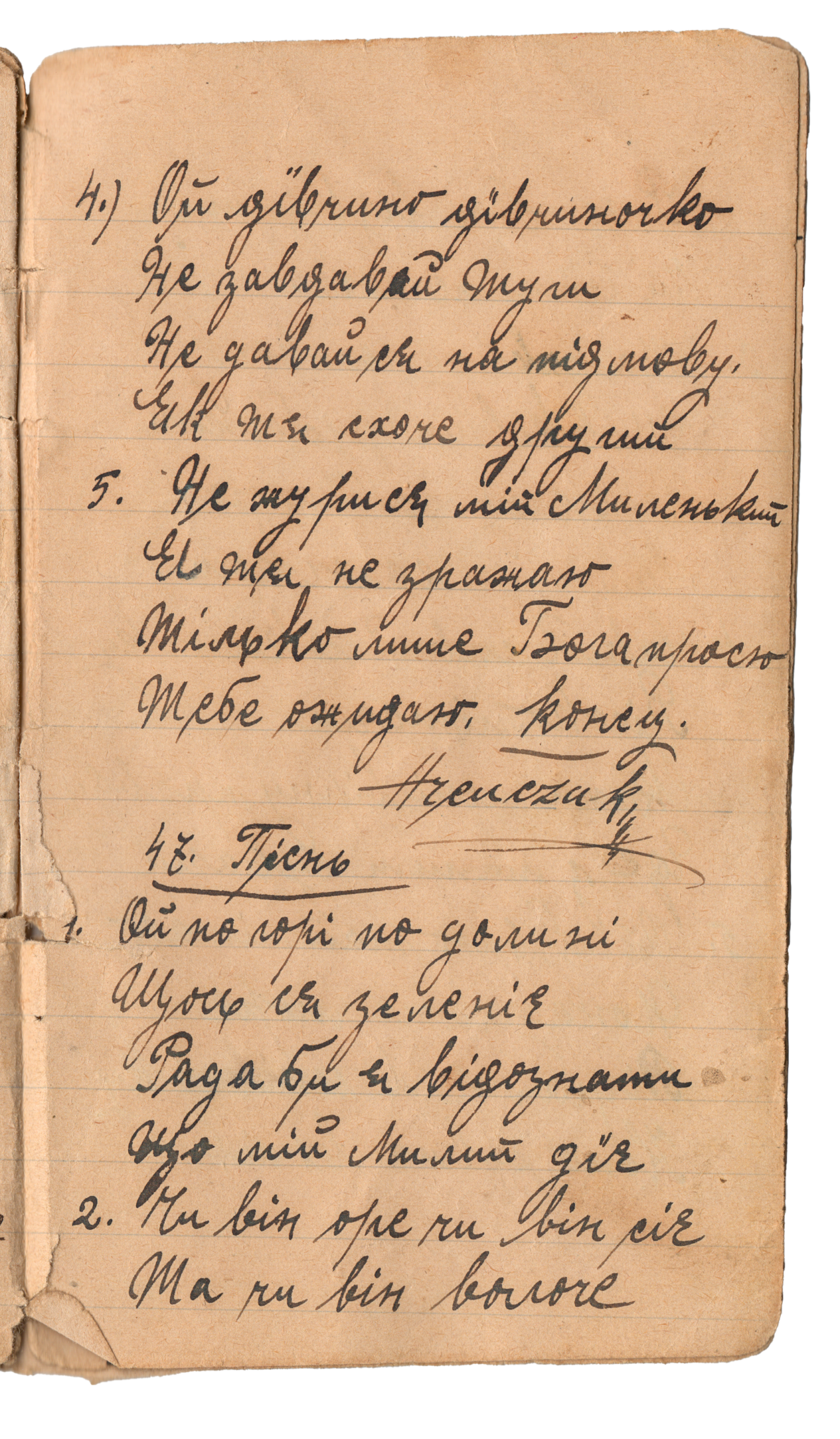
4.) Ой дівчино дівчиночко
Не забдавай муки
Не забдайся на підмову,
Аж ти схоче другий.
5. Не журись мій Миленький
Ей ти не зраджай
Мілько лише Бога просю
Тебе ожидай. конец.
Непеча к.
42. Піснь
1. Ой по горі по долині
Що ся зеленіє
Рада би я відознати
Що мій милий діє
2. Ми він оре ми він ріє
Ма ми він волоре
4.) Oh girl, little girl
Do not cause me torments
Do not get yourself persuaded,
If another one wants you.
5. Do not worry, my dear little one
Hey, do not betray
I only ask God
I will wait for you. end.
Nepencha k.
42. Song
1. Oh on the mountain, on the valley
What is turning green
I would be glad to find out
What my dear one is doing
2. Whether he plows, whether he sows
Or whether he harrows
Song 41 (closing verses): The final two stanzas form a tender, reciprocal dialogue of reassurance between lovers. The male speaker begs the girl not to torment him by allowing herself to be swayed or “persuaded” by another suitor (“Не забдавай муки / Не забдайся на підмову”). In direct response, the female speaker calms his fears, promises unwavering fidelity (“Ей ти не зраджай”), and declares she will patiently wait for him, calling on God as witness. The core is mutual fidelity under the threat of separation or temptation—a classic folk motif of loyalty tested by distance or rivals, resolved through heartfelt vows and prayer.
Song 42 (first two stanzas): The song opens with a young woman gazing at the greening mountain and valley landscape (“Ой по горі по долині / Що ся зеленіє”) and yearning to know what her “милий” (beloved) is doing right now. She imagines him at farm work—plowing, sowing, or harrowing the fields (“Ми він оре ми він ріє / Ма ми він волоре”). The core here is longing and pastoral curiosity: the pain of physical separation is softened (or intensified) by picturing the beloved in the familiar rhythms of rural labor.
Overall theme across both sections These verses belong to the same emotional world of Ukrainian folk love songs:
Together they paint the classic folk picture of young love in the Carpathian countryside: fidelity is declared, distance is felt, and the beloved’s daily toil becomes an object of tender longing. The shift from dialogue (Song 41) to solitary reflection (Song 42) keeps the same heart—loyalty and yearning—while moving the focus from reassurance to quiet observation.