10.
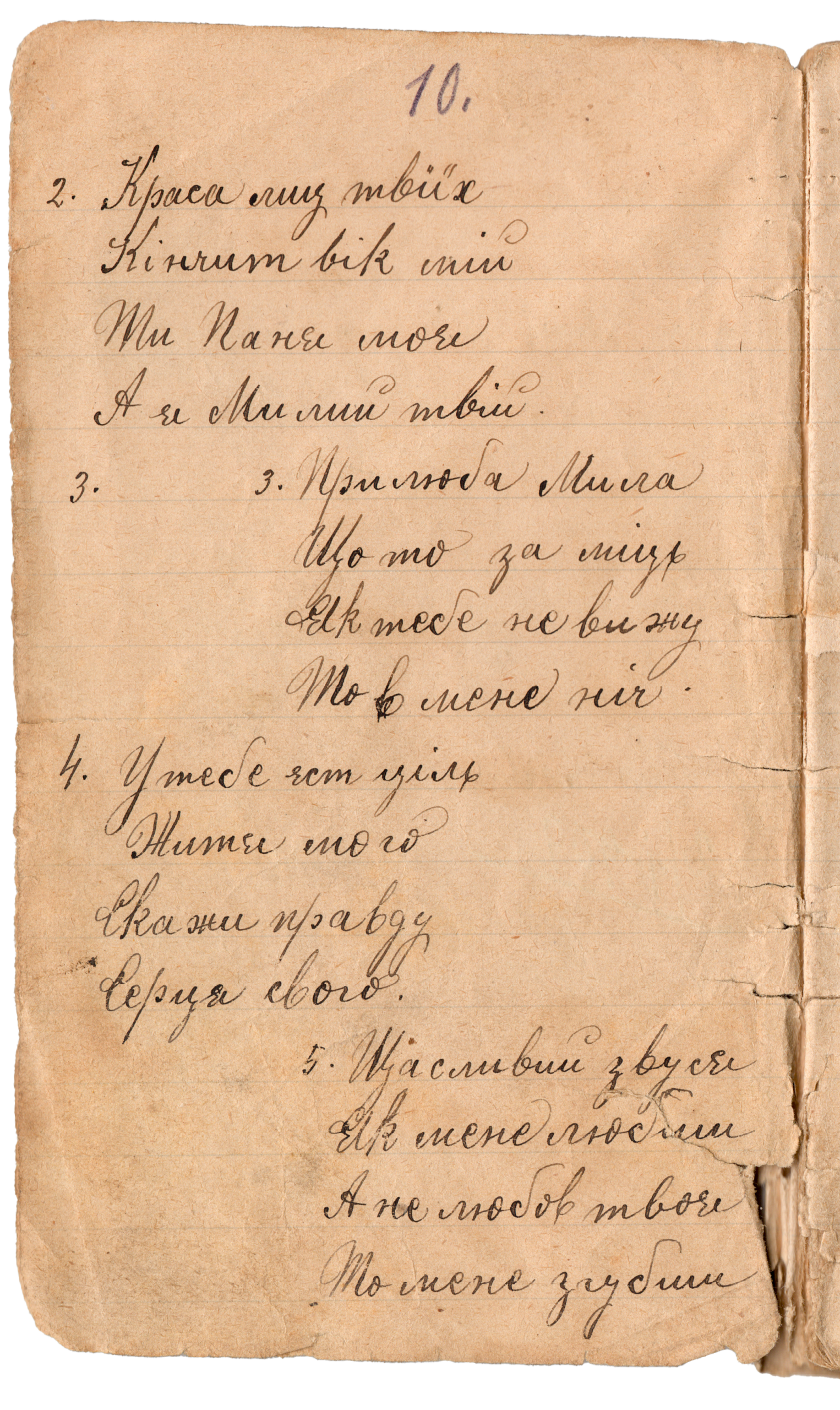
2. Краса лиц твоїх
Кінчит вік мій
Ми Пане моє
А я милий твій .
3.
3. Примова Мила
Що то за мір
Як тебе не вижу
Мов мене нір .
4. У тебе єст ціль
Життя мого
Скажи правду
Сердця свого .
5. Щасливий звуси
Як мене любиш
А не любов твоя
То мене згубиш
10.
2. The beauty of your face
Ends my life
We, my Lord,
And I am your beloved.
3.
3. Dear saying, dear Mila
What kind of world
When I do not see you
As if I am not.
4. You have the purpose
Of my life
Tell the truth
Of your heart.
5. Happy [one] hears
When you love me
But if it is not your love
Then you will destroy me.
The poem on page 10 (from the notebook) is a set of short, interconnected love verses—likely excerpts or stanzas from folk-style “pisni” (songs)—centered on passionate romantic devotion.
Core message: The speaker’s entire existence, happiness, and sense of self are completely dependent on the beloved (“Mila,” the dear one). Her beauty and love give his life meaning and purpose; without them, he feels he ceases to exist or will be destroyed.
Main themes:
It’s classic romantic-folk poetry: intense emotional vulnerability, idealization of the beloved, and the pain of potential separation or unrequited feeling. The tone is tender yet urgent.