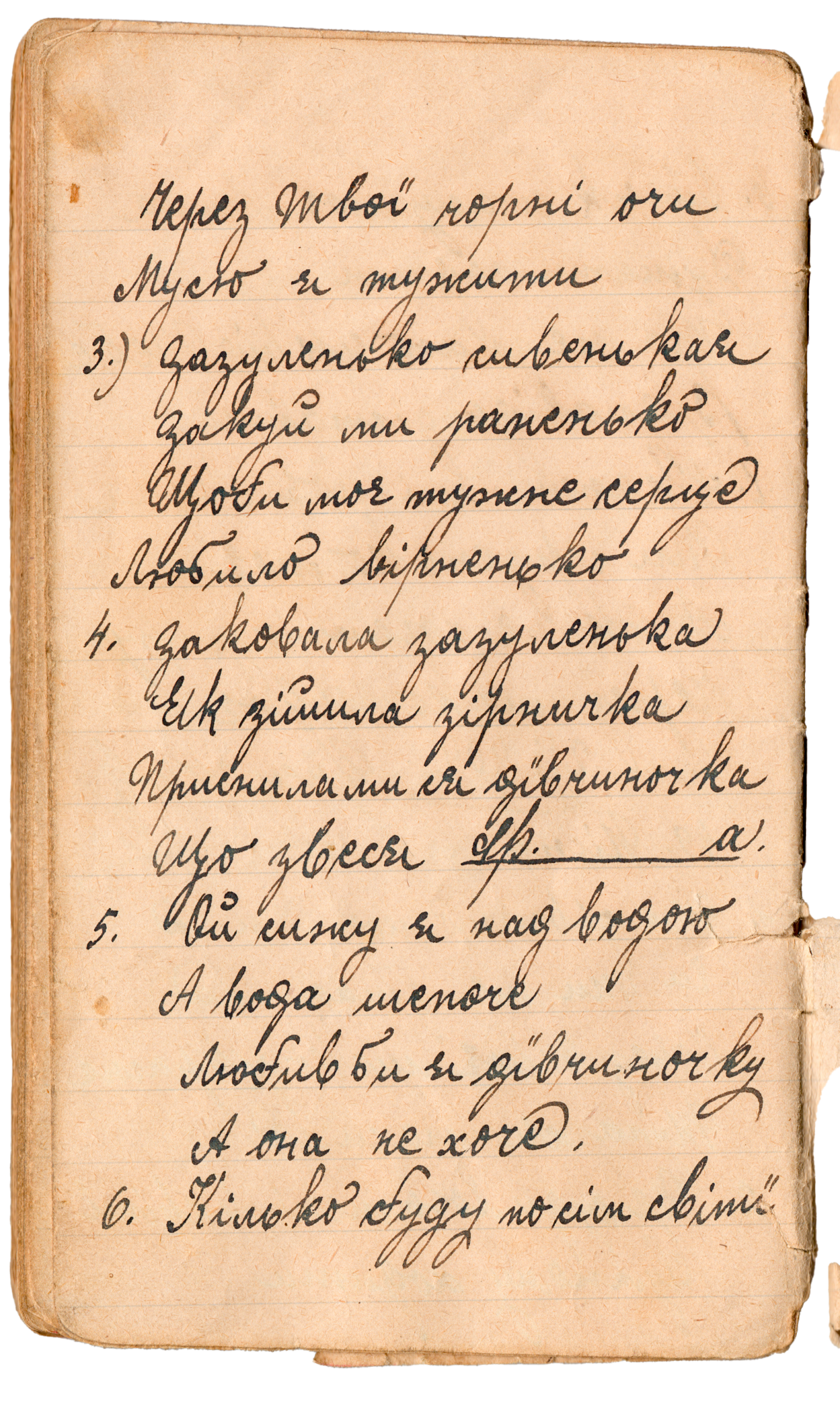
Через твої чорні очі
Мусю я тужити
3.) Зазуленко сивенькая
Забудь ти раненько
Щоби моє тужне серце
Любило вірненько
4. Закохала зазуленька
Як дівчина зірниця
Приспіва ми си дівчиночка
Що звеся а.
5. Ой сину я над водою
А вода темна
Любив би я дівчиночку
А она не хоро.
6. Кілько буду по сім світі
Through your black eyes
I must grieve
3.) Little gray cuckoo
Forget you early
So that my grieving heart
Loved faithfully
4. The little cuckoo fell in love
Like a girl star
I sang with you little girl
What is called a.
5. Oh son I am above the water
And the water is dark
I would love a little girl
But she is not good.
6. How long will I be in this world
Core message: This is a deeply melancholic folk-style love lament. The speaker is overwhelmed by grief and longing caused by a woman’s “black eyes” (a classic Ukrainian folk symbol of captivating yet painful beauty). He urges a “little gray cuckoo” (зазуленко сивенькая) — a traditional Slavic emblem of sorrow, a sad maiden, or unfulfilled love — to forget him early so his own grieving heart can somehow remain faithful. The verses then shift to the cuckoo herself falling in love (like a shining “star-girl”), a moment of dark-water imagery, and the painful admission that the girl he loves is “not good” (не хоро). It ends with an existential sigh: how long must he wander this world carrying such sorrow?
Main theme: The bittersweet torment of romantic love — its beauty, its betrayal, and its inescapable sadness. The poem uses classic Carpathian/Ukrainian folk symbols (black eyes, the cuckoo, starry beauty, dark water) to express how love both elevates and destroys the heart, blending longing, fidelity despite heartbreak, and quiet resignation about life’s brevity. It’s a perfect example of the notebook’s overall collection: raw, traditional songs of love’s joy mixed with its inevitable pain.