14.
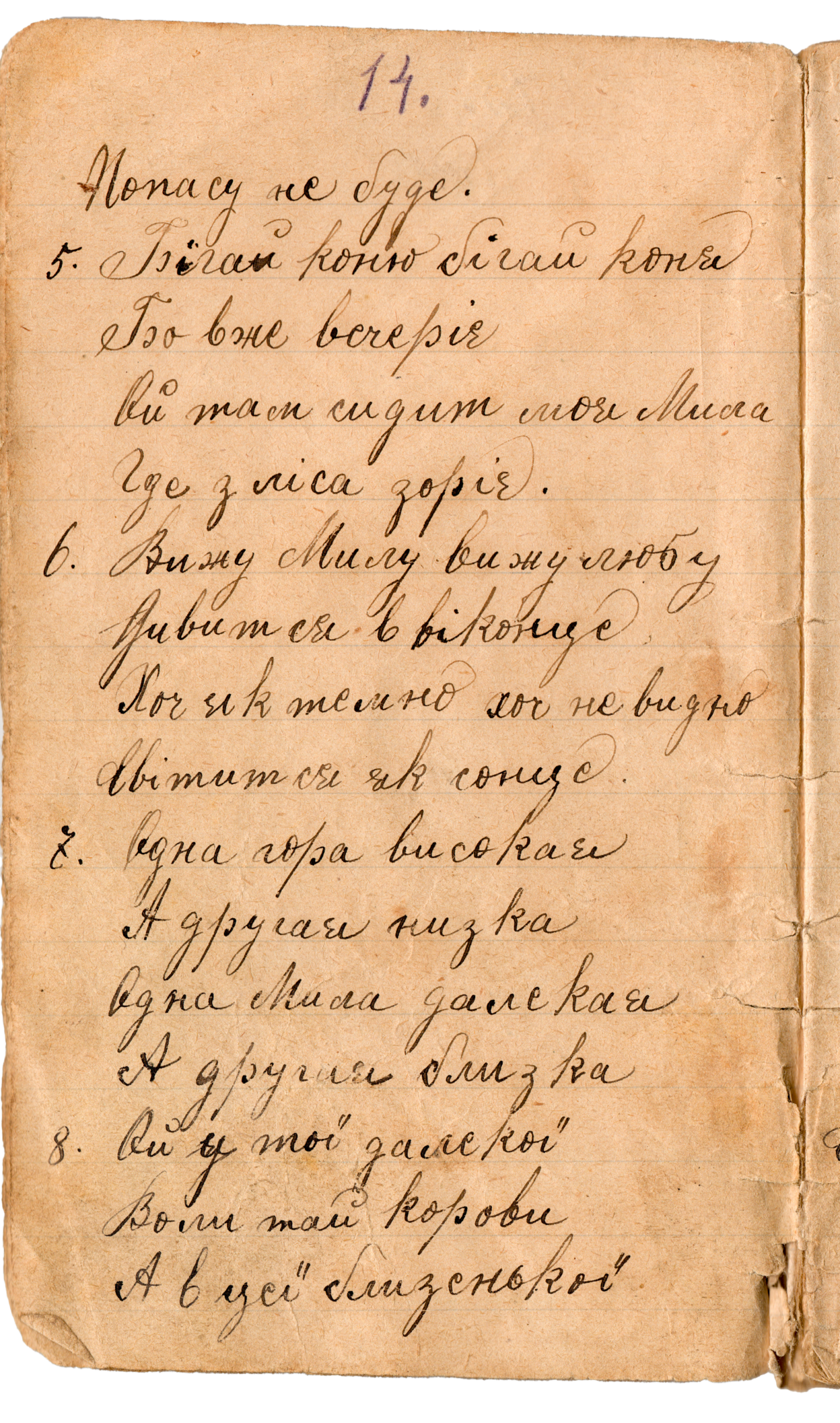
Мопасу не буде.
5. Тікай коню бігай коню
Гбо вже берегів
ві там сидит моя Мила
где з ліса зоріє.
6. Вижу Мнлу вижу любу
дивит ся в вікноце
Но як темно лот не видно
ввітит ся як сонце.
7. Одна гора висока
А друга низка
Одна Мила далекая
А друга близка
8. Ви у тої далекої
Воли таї корови
А в цеї близенкої
14.
There will be no pasture.
5. Flee, horse, run, horse
Because it’s already the shores
There sits my dear
Where from the forest the dawn appears.
6. I see my dear, I see my love
She looks into the window
But how dark, though nothing is visible
It shines like the sun.
7. One mountain is high
And the other is low
One dear is far away
And the other is close
8. You in that far one
Oxen and cows
And in this close one
Core message The speaker is a young man (or Cossack) burning with desire to reach his “Мила” (his beloved/dear one). He addresses his horse with frantic commands (“Тікай коню, бігай коню” – “Flee, horse, run, horse”), because she is already waiting for him at the edge of the forest at dawn. Despite physical distance and literal darkness, her image shines in his mind “як сонце” (like the sun). The poem captures that electric moment when love overrides every obstacle – time, space, night itself.
Main themes
Overall, this short fragment pulses with the classic folk-song energy of youthful passion, impatience, and idealised love – the same emotional world found throughout the entire notebook. It’s less about philosophical reflection and more about raw feeling: “I see her, I need her, I’m coming right now.”