16.
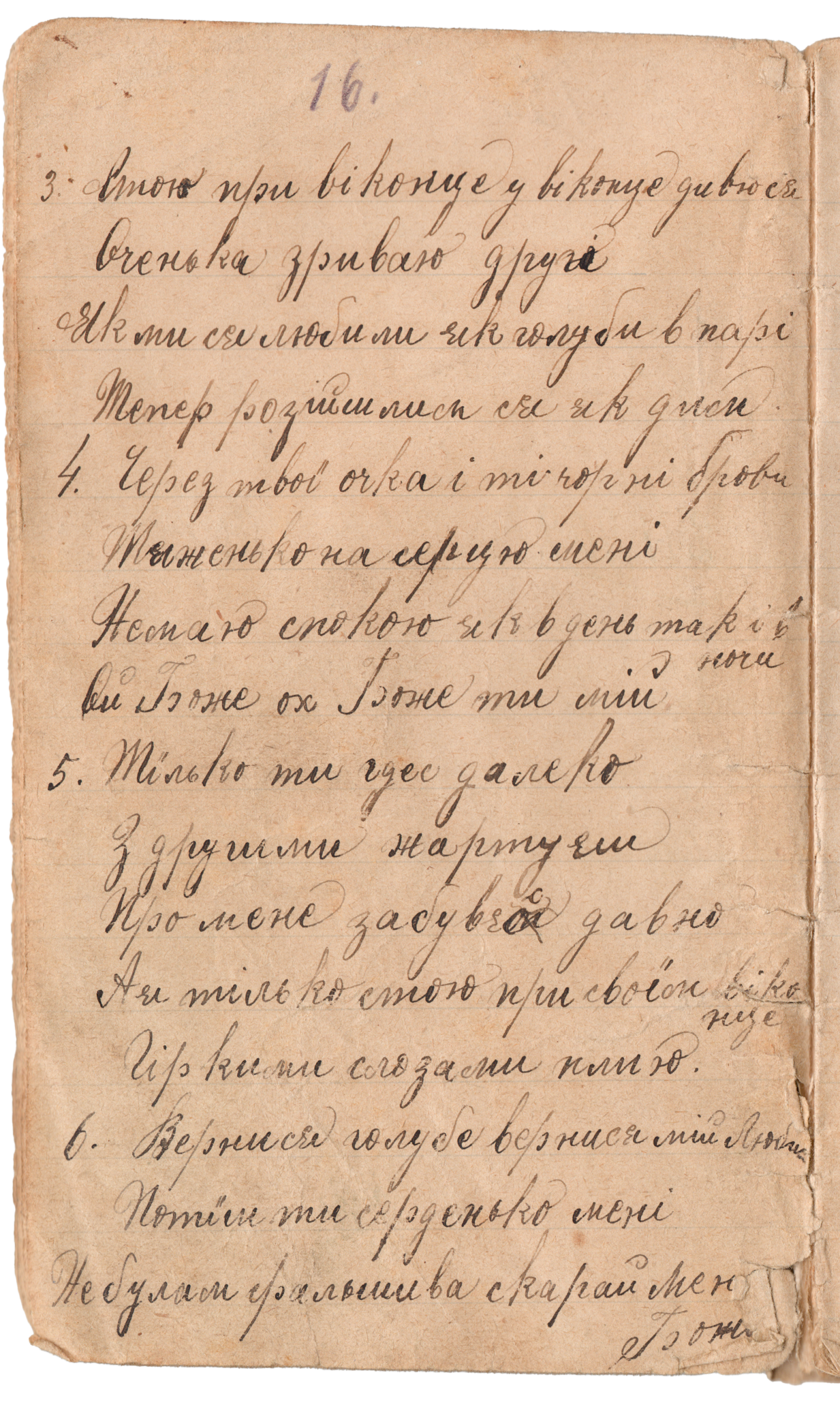
3. Втома при віконцу у віконцу дивлюсь
Втома зриваю другий
Як ти си любили як голуби в парі
Тепер розійшлися си як дим.
4. Через твої орли і ті чорні брови
Миленько на серцу мені
Немаю спокою як в день так і в ночі
Ви Гоже ох Гоже ти мій.
5. Мілько ти гдес далеко
З другими жартуєш
Про мене забувай давно
Аи тільки стою при своїм віко
Цір кими словами пишу.
6. Вернися голубе вернися мій любий
Потім ти сердечко мені
Не буди си фальшива скарай мен
Гоже
16.
3. Tired, at the window, at the window I look,
Tired, I tear off the second one.
How you loved each other like doves in a pair,
Now they have parted like smoke.
4. Through your eagles and those black eyebrows
Darling, it is on my heart.
I have no peace, neither by day nor by night.
You, God, oh God you are mine.
5. Darling, you are somewhere far away
With others you are joking,
You forgot about me long ago
But only I stand at my window
With these words I write.
6. Return, dove, return my dear,
Then you, my little heart,
Do not be false, punish me,
God.
The core of this poem (verses 3–6 from page 16 of the notebook) is a raw, tormented plea from a heartbroken lover who is consumed by separation, jealousy, and despair. The speaker stands at the window, watching spring pass, while bitterly contrasting the once-happy, dove-like love they shared with the beloved (“Mil’ko” / darling) to its current ruin — the relationship has “scattered like smoke.” The beloved is now far away, flirting and forgetting the speaker, who suspects he is with another woman “at your own window.” This realization brings sleepless anguish (“no peace either by day or by night”) and floods of bitter tears, ending in a desperate, repeated call for the “dove” (a classic endearment) to return and stay faithful.
Main themes: