42.
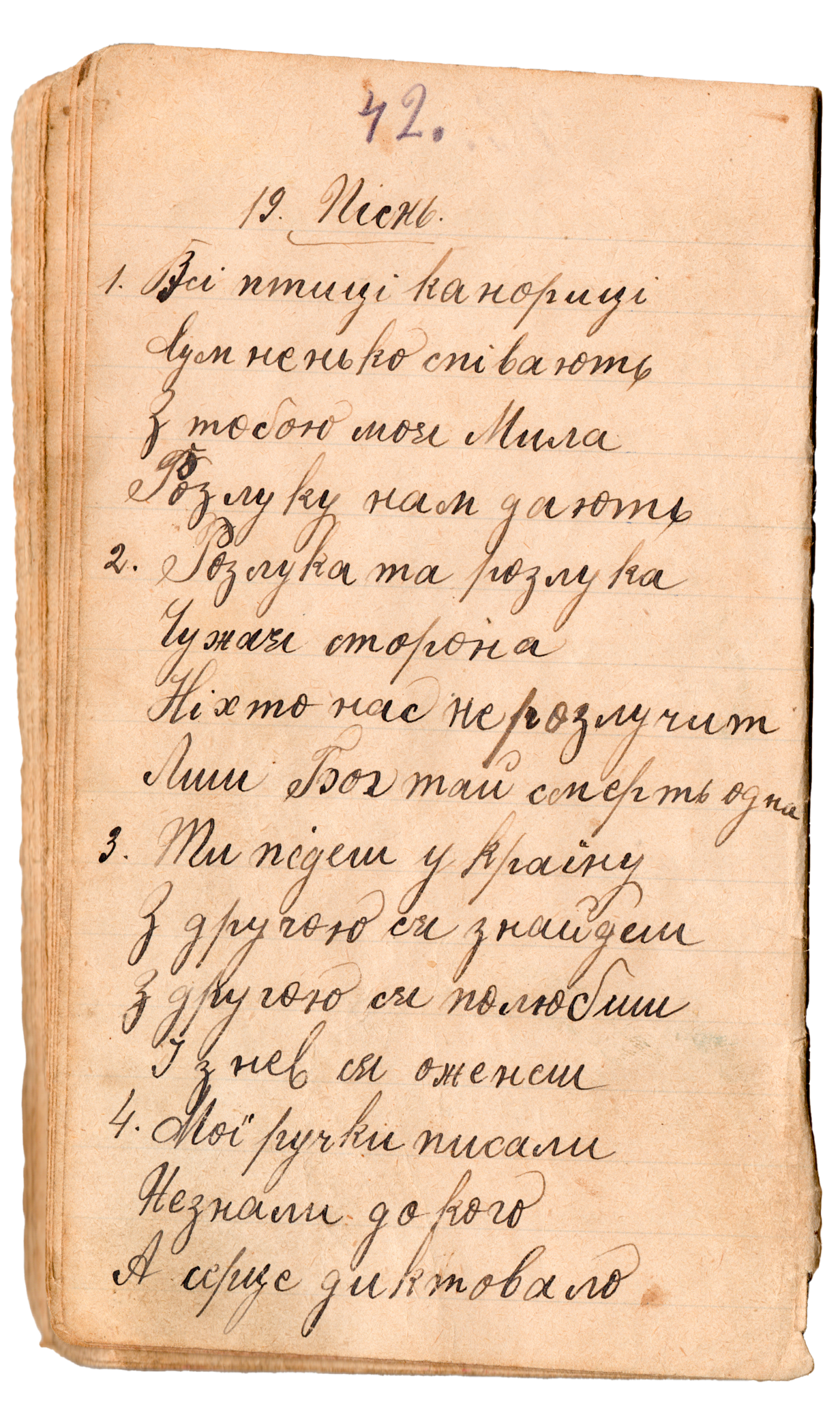
19. Піснь.
1. Всі птиці канориці
Ум ненько співають
З тобою моя Мила
Розлуку нам дають
2. Розлука та розлука
Чужая сторона
Ніхто нас не розлучить
Лише Бог та й смерть одна
3. Ми підем у крайну
З другого ся знайдем
З другого ся полюбим
З нев ся оженим
4. Мої ручки писали
Незнани дорога
А серце диктовало
42.
19. Song.
1. All the birds are canaries
They sing sweetly
With you my Dear
They give us separation
2. Separation and separation
The foreign side
No one will separate us
Only God and death alone
3. We will go to a country
From another we will find each other
From another we will fall in love
With her we will marry
4. My hands wrote
An unknown road
And the heart dictated
Core Message: This is a classic Ukrainian folk-style love song about unbreakable romantic devotion in the face of forced separation. The lovers are being pulled apart (by circumstances, distance, or “foreign lands”), yet they affirm that nothing—not distance, not strangers, not even human interference—can truly divide them. Only God and death have that power. Their bond is fated: they will find each other again, fall in love anew, and marry. The final stanza is especially tender—the singer’s hands may not know the road ahead, but the heart is writing the story.
Main Themes:
In short, it’s an optimistic declaration of fidelity: “We may be torn apart now, but our love is permanent and will triumph.”